


 中 文
中 文
How to Choose a Dental Porcelain Furnace: A Complete Buying Guide for Dental Labs
2026-06-15
2026-09-28
Coloring is an important step in the fabrication of many zirconia restorations. For zirconia that requires liquid coloring after milling, the coloring solution helps establish the desired shade before sintering.
However, coloring is not the final step before the furnace.
After coloring, the zirconia restoration generally needs to be dried thoroughly before sintering.
Drying is important because residual moisture and coloring liquid can affect how the restoration behaves during the early stages of the sintering process. The exact drying procedure depends on the coloring system, restoration size, and material manufacturer's instructions.
Pre-sintered zirconia is porous and can absorb coloring liquid through its surface and into the material.
Depending on the coloring method, the liquid can penetrate the zirconia to different depths. The coloring solution may contain water and other components that need to be removed before the restoration enters the sintering furnace.
A simplified workflow is:
Milling → Cleaning → Coloring → Drying → Sintering
The drying step therefore acts as a transition between liquid coloring and thermal processing.
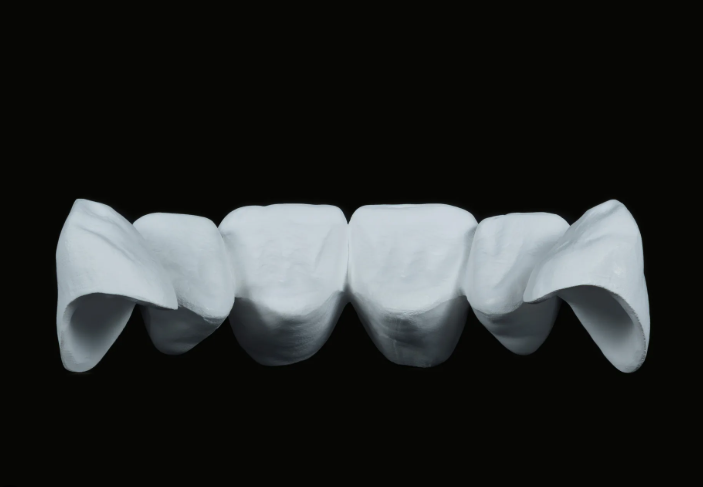
After coloring, the zirconia may retain moisture both on its external surface and within its porous structure.
If the restoration enters the furnace while excessive liquid remains, the liquid will be exposed to heating during the early stage of the sintering cycle.
Controlled drying allows much of this moisture to be removed before high-temperature processing begins.
Zirconia restorations are not always uniform in thickness.
A thin veneer, a crown, and a large full-arch restoration can have very different moisture distribution after coloring.
If moisture remains inside a thicker restoration, evaporation during heating may occur at different rates in different areas.
This is one reason why larger or thicker restorations may require more careful drying than small restorations.
Coloring is intended to create a controlled shade distribution throughout the restoration.
If the coloring liquid is not allowed to dry properly, the subsequent heating process may not proceed under the intended conditions.
Drying therefore forms part of the overall color-control process.
It should not be considered merely a cosmetic step.
Not necessarily.
This distinction is important.
For zirconia that is manually or mechanically colored with a liquid coloring solution after milling, drying is generally required before sintering.
The restoration should be dried according to the requirements of the specific coloring system and zirconia material.
Pre-shaded zirconia is already colored during manufacturing.
If no additional liquid coloring is applied after milling, there is no separate "post-coloring drying" step.
The normal cleaning and preparation procedure before sintering should still be followed.
Therefore, the statement "all zirconia must be dried after coloring" is too broad.
A more accurate statement is:
Zirconia restorations that undergo liquid coloring should generally be adequately dried before sintering.
A typical workflow for liquid-colored zirconia is:
The restoration is milled from a pre-sintered zirconia blank.
The restoration should be handled carefully because the pre-sintered material is relatively fragile.
After milling, dust and other residues should be removed according to the material manufacturer's recommended procedure.
A clean surface helps ensure more consistent interaction with the coloring liquid.
The coloring liquid can be applied using the recommended dipping or brushing technique.
The amount of coloring solution and application method should be controlled according to the desired shade and the manufacturer's instructions.
After coloring, allow the restoration to dry thoroughly before placing it in the furnace.
The drying method may involve natural drying or controlled heating, depending on the coloring system.
Once adequately dried, the restoration can proceed to the programmed sintering cycle.
The sintering schedule should correspond to the zirconia material being used.
There is no universal drying time for every zirconia coloring procedure.
This is because drying requirements can vary according to:
For example, a small single crown and a large full-arch restoration may not require identical drying conditions.
Therefore, a fixed statement such as "all zirconia must be dried for exactly 30 minutes" should not be used unless it is supported by the specific material and coloring system.
The safest approach is to follow the validated drying parameters provided for the material and coloring system.
Insufficient drying does not necessarily produce the same result in every case, but several problems may become more likely.
Residual liquid may remain inside the porous pre-sintered zirconia.
When residual liquid evaporates during the early heating stage, the thermal process may differ from the intended sintering conditions.
Uneven distribution or removal of coloring liquid may contribute to inconsistent shade development.
The larger and thicker the restoration, the more important it becomes to consider how deeply the coloring liquid has penetrated and whether sufficient drying has occurred.
This is particularly relevant when processing large bridges or full-arch restorations.
Not exactly.
Drying and sintering are two different stages of zirconia processing.
Drying is primarily intended to remove moisture and volatile components remaining after liquid coloring.
Sintering is the high-temperature process that densifies the zirconia and develops its final physical properties.
The two stages should therefore not be treated as interchangeable.
Putting a wet restoration directly into a sintering cycle and assuming that the furnace will "dry it automatically" is not equivalent to following a controlled drying procedure.
Several factors can influence how quickly a colored zirconia restoration dries.
Thicker areas generally require more attention because moisture may remain deeper inside the material.
Larger restorations have a greater overall surface area and may contain more coloring liquid.
Dipping and brushing can introduce different amounts of liquid into the zirconia.
Different formulations may have different evaporation characteristics.
Higher temperature does not automatically mean better drying. Excessive or uncontrolled heating may affect the material or coloring process.
For this reason, the recommended drying conditions should be followed rather than simply increasing the temperature to shorten the process.
The entire process can be understood as three different stages:
Coloring → Remove the liquid → Sinter
Each stage has a different purpose.
Coloring:
Introduces the desired shade into the pre-sintered zirconia.
Drying:
Removes residual moisture and prepares the restoration for thermal processing.
Sintering:
Densifies the zirconia and develops its final structure and properties.
Skipping the drying stage when liquid coloring is used means moving from a wet material directly into a high-temperature process without completing the intended preparation step.

Dry & wet milling for zirconia, PMMA, wax with auto tool changer.
learn more
High-precision 3D scanning, AI calibration, full-arch accuracy.
learn more
40-min full sintering with 57% incisal translucency and 1050 MPa strength.
learn more
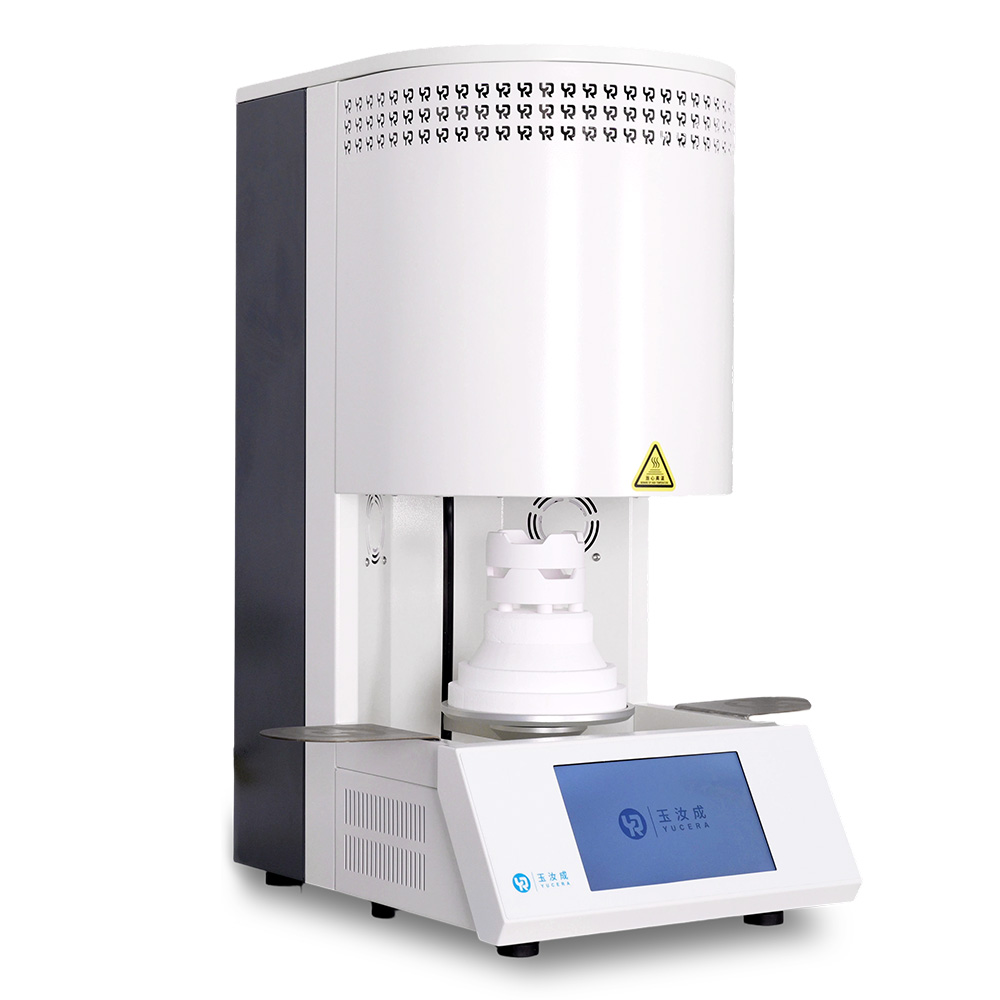
40-min cycle for 60 crowns, dual-layer crucible and 200°C/min heating.
learn more
High-speed LCD printer for guides, temporaries, models with 8K resolution.
learn more


2026-06-15
2025-04-20
2026-05-01


