


 中 文
中 文
Cracking the Code 1: Why Zirconia Crowns Fracture – Essential FAQ and Prevention Guide
2026-02-02
2026-06-15
As dental restorations continue to evolve toward higher aesthetics and greater precision, the dental porcelain furnace remains one of the most important pieces of equipment in a modern dental laboratory. Whether firing porcelain layers, glazing zirconia restorations, staining crowns, or crystallizing glass ceramics, the performance of the furnace directly affects the final restoration quality.
However, not all porcelain furnaces offer the same level of temperature accuracy, vacuum control, program flexibility, or operational convenience. Choosing the right furnace can improve restoration consistency, reduce remakes, and increase laboratory productivity.
This guide explores the most important factors every dental laboratory should consider before investing in a dental porcelain furnace.
A dental porcelain furnace is designed to perform various ceramic firing procedures used in restorative dentistry.
Common applications include:
By precisely controlling temperature and vacuum conditions, the furnace helps create restorations with optimal color, translucency, surface quality, and strength.
Because modern dental laboratories process a wide range of materials, the porcelain furnace has become an essential component of an efficient CAD/CAM workflow.
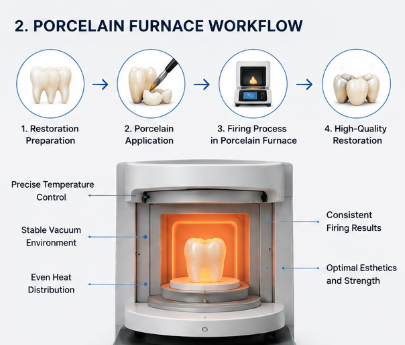
The quality of a ceramic restoration depends not only on the material itself but also on the firing process.
A furnace with poor temperature consistency or unstable vacuum performance may lead to:
For laboratories focused on delivering predictable and high-quality restorations, selecting the right porcelain furnace is a critical investment.
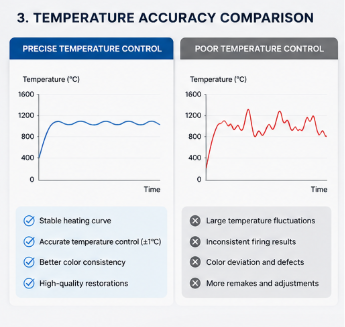
Temperature control is one of the most important factors when evaluating a porcelain furnace.
Even small temperature variations can affect:
A high-quality furnace should provide precise temperature regulation throughout the entire firing cycle. Consistent heating ensures that restorations achieve the intended appearance and mechanical performance.
Advanced temperature control systems can also improve repeatability, allowing technicians to reproduce successful firing results more reliably.
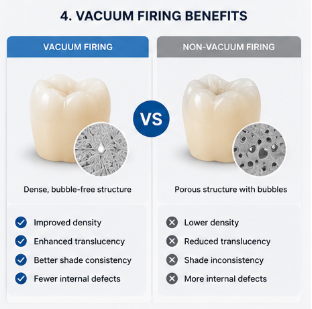
Vacuum technology plays a crucial role during ceramic firing.
A stable vacuum environment helps remove trapped air and minimizes the risk of porosity within the restoration.
Benefits of effective vacuum control include:
When comparing different furnaces, laboratories should evaluate the accuracy and stability of the vacuum system, especially when producing highly aesthetic restorations.
Today's dental laboratories often process multiple restoration types and ceramic materials.
As a result, a modern porcelain furnace should offer sufficient program storage and customization options.
Key considerations include:
A larger program library allows technicians to quickly select appropriate firing parameters while reducing setup time and human error.
The range of materials used in dental laboratories continues to expand.
In addition to conventional porcelain, many laboratories now work with:
Choosing a furnace that supports a wide variety of ceramic materials helps protect the laboratory's investment and provides greater flexibility for future production needs.
A versatile furnace can adapt to changing workflows and material innovations without requiring additional equipment.
User experience can significantly impact laboratory productivity.
Modern porcelain furnaces increasingly feature:
For busy laboratories, efficient operation can translate into improved workflow and reduced downtime.
Purchasing a porcelain furnace should be viewed as a long-term investment.
Beyond the initial purchase price, laboratories should also consider:
Reliable equipment helps reduce unexpected interruptions and lowers the overall cost of ownership throughout the life of the furnace.
Before making a purchasing decision, consider the following questions:
Consistent temperature control is essential for predictable firing results.
Reliable vacuum control contributes to restoration quality and aesthetics.
Flexible program management improves efficiency when working with multiple materials.
A versatile furnace supports future workflow expansion.
User-friendly controls can significantly improve laboratory productivity.
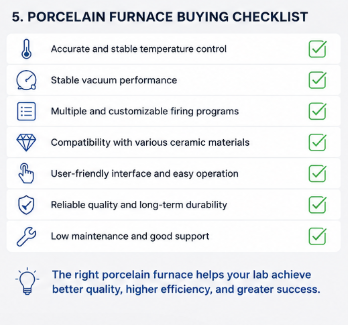
Every dental laboratory has unique production requirements, restoration types, and workflow priorities.
Smaller laboratories may focus on simplicity and ease of use, while larger production centers often require greater program flexibility, advanced vacuum control, and higher firing consistency.
When evaluating different options, laboratories should prioritize:
✔ Temperature accuracy
✔ Stable vacuum performance
✔ Flexible firing programs
✔ Material compatibility
✔ Reliable long-term operation
✔ User-friendly controls
These factors contribute directly to restoration quality, workflow efficiency, and overall laboratory success.
A dental porcelain furnace is far more than a heating device—it is a critical tool that influences the aesthetics, consistency, and long-term quality of ceramic restorations.
By focusing on temperature precision, vacuum performance, program flexibility, material compatibility, and operational reliability, dental laboratories can make a more informed purchasing decision.
Modern porcelain furnaces designed around these requirements help laboratories achieve predictable firing results, improved efficiency, and greater confidence in every restoration they produce.

Dry & wet milling for zirconia, PMMA, wax with auto tool changer.
learn more
High-precision 3D scanning, AI calibration, full-arch accuracy.
learn more
40-min full sintering with 57% incisal translucency and 1050 MPa strength.
learn more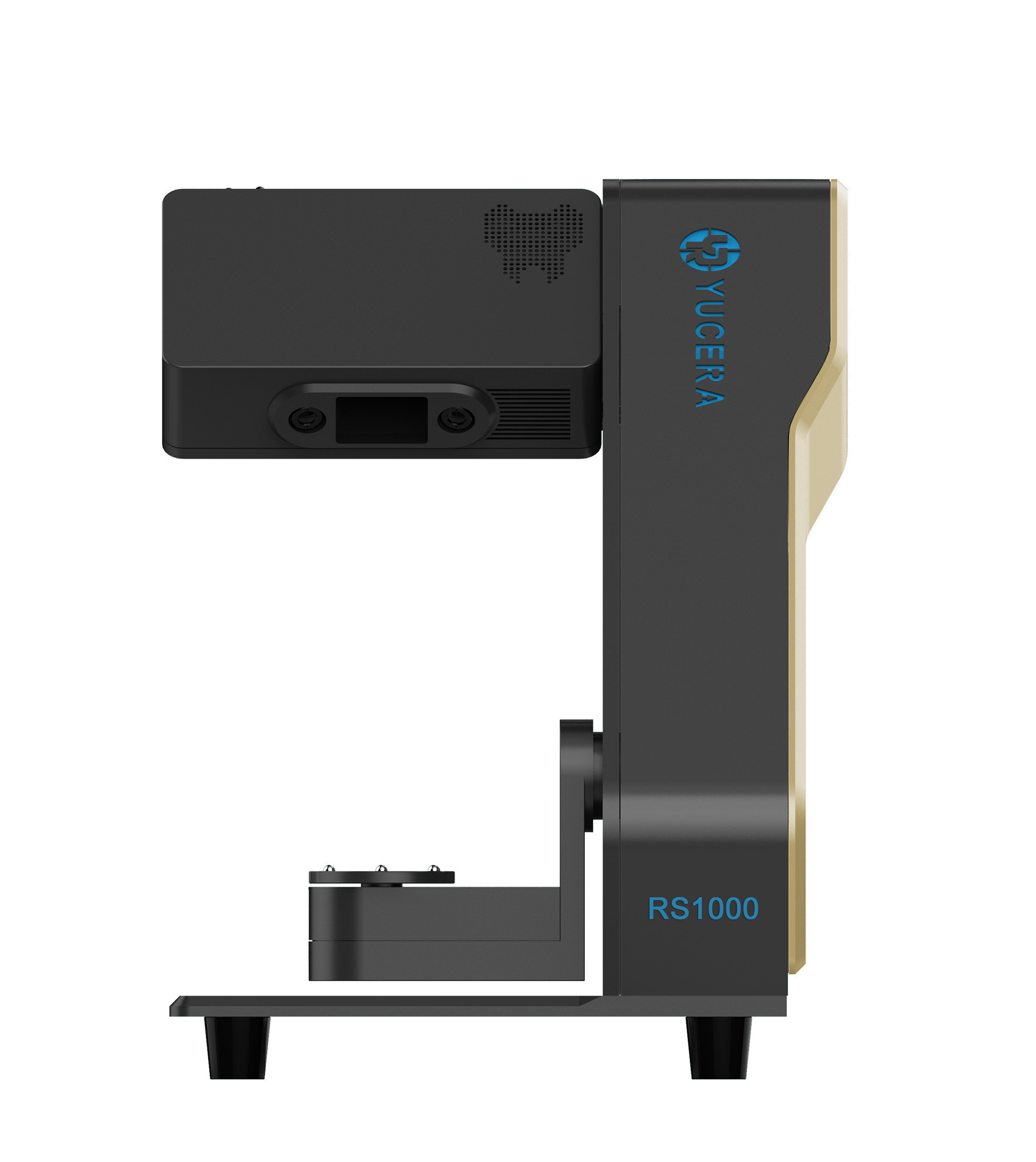
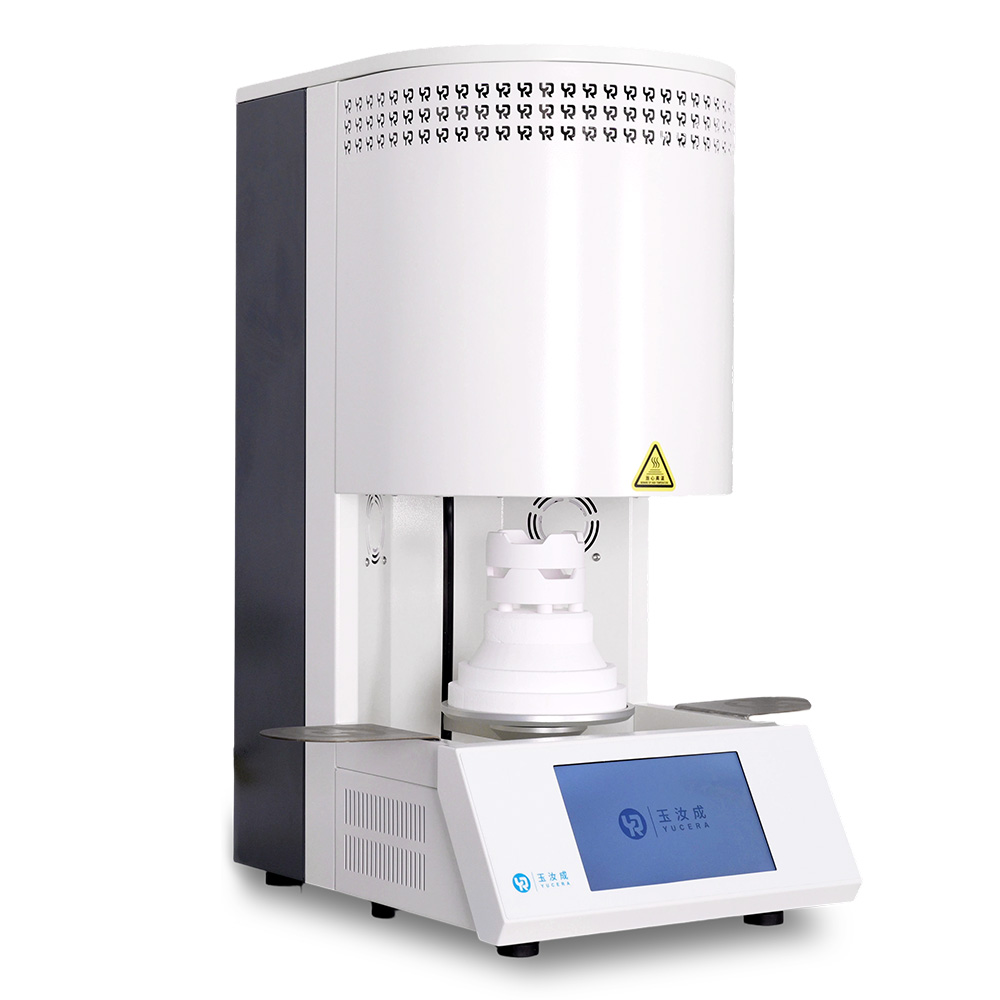
40-min cycle for 60 crowns, dual-layer crucible and 200°C/min heating.
learn more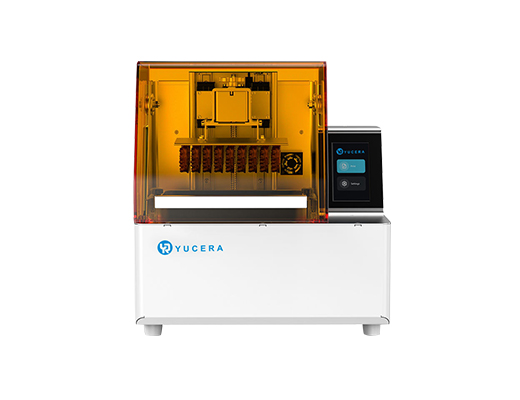
High-speed LCD printer for guides, temporaries, models with 8K resolution.
learn more


