


 中 文
中 文
What Are the Most Common Dental Issues Faced by Mexicans
2025-04-17
2026-09-07
Zirconia is widely used in dental restorative materials because of its high strength, good wear resistance, and excellent biocompatibility. Depending on the yttria content, zirconia blocks are commonly classified as 3Y, 4Y, or 5Y zirconia. The yttria content affects not only the crystalline phase composition of zirconia but also its resistance to aging, strength, fracture toughness, and translucency.
The aging of zirconia generally refers to hydrothermal aging, also known as low-temperature degradation. The oral environment contains moisture, temperature fluctuations, and repeated occlusal loading. Under the combined influence of these factors, the tetragonal phase on the zirconia surface may gradually transform into the monoclinic phase.
After sintering, zirconia may contain tetragonal, cubic, and monoclinic phases. The tetragonal phase provides favorable mechanical properties; however, it may undergo the following transformation under the influence of moisture and stress:
Tetragonal zirconia → Monoclinic zirconia
This phase transformation is accompanied by a certain degree of volumetric expansion. When the transformation progressively extends from the surface toward the interior, it may result in surface roughening, microcrack formation, grain pull-out, and, in severe cases, a reduction in the strength of the material.
The addition of yttria stabilizes the crystalline phases of zirconia. Yttrium ions partially replace zirconium ions in the zirconia lattice, generating oxygen vacancies and thereby improving the stability of the tetragonal or cubic phase at room temperature. This reduces the likelihood of tetragonal-to-monoclinic transformation.
However, excessive stabilization of the tetragonal phase is not necessarily beneficial. Under mechanical stress, some tetragonal grains can transform into the monoclinic phase and resist crack propagation through transformation-induced volume expansion. This mechanism is known as transformation toughening. Therefore, zirconia materials must achieve an appropriate balance between phase stability and transformation-toughening capability.
Yttria content is generally expressed in mol%. Different yttria concentrations result in different phase compositions and, consequently, different performance characteristics.
3Y zirconia contains approximately 3 mol% yttria and consists predominantly of the tetragonal phase. It generally exhibits high strength and fracture toughness.
Its main characteristics include:
Overall, 3Y zirconia is characterized by excellent mechanical properties but comparatively limited resistance to low-temperature degradation.
4Y zirconia contains approximately 4 mol% yttria and generally consists of a mixture of tetragonal and cubic phases.
Compared with 3Y zirconia, 4Y zirconia has improved tetragonal-phase stability and generally provides better resistance to hydrothermal aging, while retaining a relatively high level of strength and fracture toughness.
Its performance lies between that of 3Y and 5Y zirconia, providing a relatively balanced combination of:
5Y zirconia contains approximately 5 mol% yttria and has a higher proportion of the cubic phase. The cubic phase is generally less susceptible to tetragonal-to-monoclinic transformation in a moist oral environment, resulting in improved resistance to low-temperature degradation.
Its main characteristics include:
In general, increasing the yttria content tends to improve phase stability and aging resistance, but may reduce strength and transformation-toughening capability.
A higher yttria content does not necessarily indicate superior overall performance.
As the yttria content increases, the proportion of the cubic phase in zirconia generally increases. The crystalline structure becomes more stable, and hydrothermal tetragonal-to-monoclinic transformation is reduced. As a result, resistance to aging is typically improved. However, because the cubic phase does not provide the same transformation-toughening effect as the tetragonal phase, the ability of the material to resist crack propagation may be reduced.
In simple terms:
In addition to yttria content, aging resistance is affected by several factors, including grain size, sintering temperature, sintering duration, porosity, alumina content, machining, and surface treatment. Even zirconia materials within the same classification may exhibit different aging behavior because of differences in composition and manufacturing processes.
Therefore, yttria content should not be considered in isolation. The evaluation should also include flexural strength, fracture toughness, translucency, phase composition, and long-term aging data.
The selection of zirconia blocks should be based on the restoration site, occlusal load, esthetic requirements, and restoration thickness.
For posterior crowns, posterior fixed partial dentures, and restorations exposed to high occlusal forces, strength and fracture toughness are generally the primary considerations.
3Y zirconia or high-strength 4Y zirconia may be considered for these applications. 3Y zirconia provides higher flexural strength and fracture toughness and is suitable for areas subjected to substantial occlusal loading. However, its susceptibility to hydrothermal aging and the potential effects of grinding, adjustment, and air abrasion should be taken into account.
When both translucency and mechanical reliability are required, 4Y zirconia is often a balanced option.
Compared with 3Y zirconia, 4Y zirconia generally offers improved translucency and aging resistance. Compared with 5Y zirconia, it retains a greater proportion of its strength and fracture toughness. It may therefore be appropriate for restorative situations requiring a combination of mechanical and esthetic performance.
For anterior restorations, thin restorations, and cases requiring high translucency, 5Y zirconia may provide advantages.
Because of its higher cubic-phase content, 5Y zirconia generally exhibits improved translucency and favorable optical properties, as well as good resistance to hydrothermal aging. However, its lower strength and fracture toughness should be considered, and it should not automatically replace 3Y zirconia in high-load areas.
Multilayer zirconia blocks may use different yttria contents or phase designs in different regions of the block. For example, the cervical region may be designed to provide higher strength, while the incisal region may be optimized for improved translucency.
This design can help combine:
When using multilayer zirconia blocks, the specific product data, restoration thickness, and clinical application should be considered. Color or translucency gradients alone should not be used to judge material performance.
Yttria is an important factor affecting the phase stability and aging resistance of zirconia blocks. In general, increasing the yttria content increases the proportion of the cubic phase, reduces hydrothermal tetragonal-to-monoclinic transformation, and improves resistance to low-temperature degradation. However, excessive yttria may weaken transformation toughening and reduce strength and fracture toughness.
Therefore, a higher yttria content does not necessarily mean better overall performance. Material selection should be based on the intended clinical application:
3Y zirconia generally emphasizes strength and fracture toughness; 4Y zirconia offers a balance of properties; and 5Y zirconia generally prioritizes translucency and aging resistance.
In clinical practice, zirconia blocks should be selected according to the restoration site, occlusal load, esthetic requirements, restoration thickness, and the manufacturer’s published performance data.

Dry & wet milling for zirconia, PMMA, wax with auto tool changer.
learn more
High-precision 3D scanning, AI calibration, full-arch accuracy.
learn more
40-min full sintering with 57% incisal translucency and 1050 MPa strength.
learn more
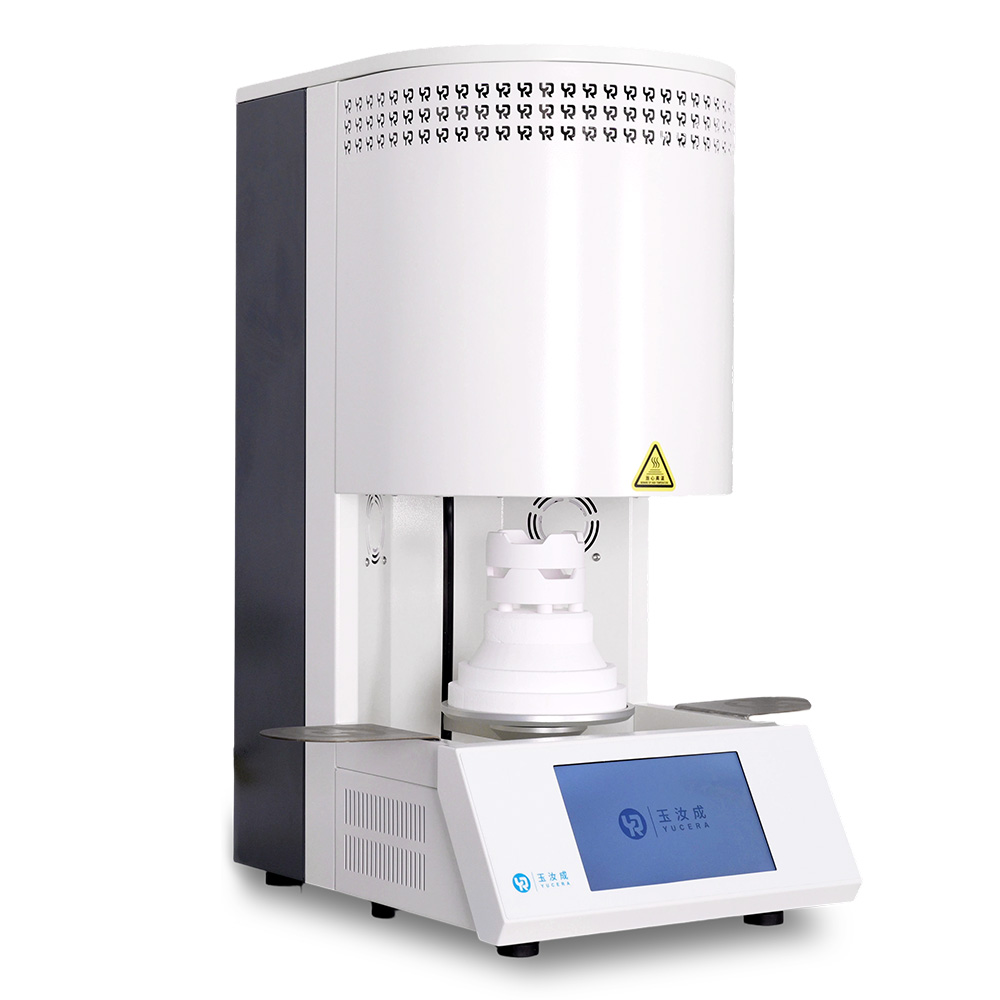
40-min cycle for 60 crowns, dual-layer crucible and 200°C/min heating.
learn more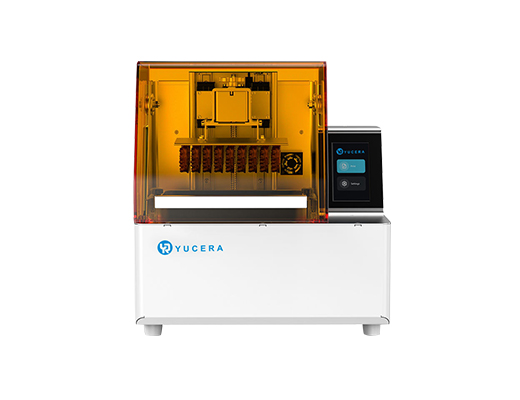
High-speed LCD printer for guides, temporaries, models with 8K resolution.
learn more


2025-04-17
2026-04-05
2025-12-09


