Dental Lithium Disilicate Glass-Ceramics

A combination of aesthetics and performance.

  • 2.4~2.7g/cm3

    Density

  • ≥300MPa

    Flexural strength

  • <100μg.cm-2

    Chemical solubility

Dental Lithium Disilicate Glass-Ceramics
A combination of aesthetics and performance.
2.4~2.7 g/cm3
Density
≥300 MPa
Flexural strength
<100 μg.cm-2
Chemical solubility

The innovative choice that combines beauty and performance

As an all-ceramic material with a shrinkage rate close to zero, it can provide great convenience for efficient design and digital processing. The process is simple and fast, and the restoration process can be completed quickly.

Device Description

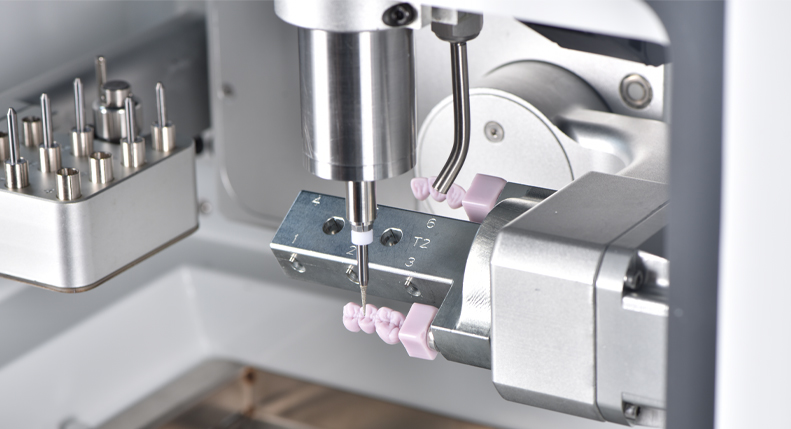
Dental Lithium Disilicate Glass-Ceramics is composed of  SiO₂, Li₂O, K₂O , P₂O₅ ,  Al₂O₃ and other oxides. The block is intended to be processed into the dental restorations such as crowns, bridges, veneers, inlays and onlays based on the anatomical rendering of the patient’s teeth using CAD/CAM (computer aided design / computer aided manufacturing) method or manual milling method. The block is a single-use device and provided non-sterile.

【Chemical Compositions】

SiO₂, Li₂O, K₂O , P₂O₅ ,  Al₂O₃ and other oxides

Inquiry Now

Advantages

Reliable chemical stability and flexural strength

High aesthetic restoration effect.

Easy to cut and Prolonging the life of the burs

Simple and fast crystallization process to reduce operating time

【Clinical Benefit Of The Product】

_ Restoration of missing tooth and masticatory apparatus portions;

_ Restoration of chewing function;

_ Tooth aesthetics Restoration.

VERSATILITY OF APPLICATION RANGE

HT and LT series(40×15×15) anatomically reduced and fully anatomical (monolithic) crowns in the anterior tooth range (e.g. single-tooth crowns, inlays, onlays, veneers),from single crown to up to 3-unit teeth, i.e. the manufacturing of.

HT and LT series(18×15×13) anatomically reduced and fully anatomical (monolithic) crowns in the anterior tooth range (e.g. single-tooth crowns, inlays, onlays, veneers),from single crown to up to 2-unit teeth, i.e. the manufacturing of.

HT and LT series(15.5×11×13,10×12.5,11×12.5,13×12.5) anatomically reduced and fully anatomical (monolithic) crowns in the anterior tooth range (e.g. single-tooth crowns, inlays, onlays, veneers),single crown, i.e. the manufacturing of.

Intended Use & Target

【Intended Use】 

Once finalized into a suitable design, the Dental Lithium Disilicate Glass-Ceramics are indicated for use as inlays, onlays, veneer, partial crowns and crowns. 

【Target Patient Population】 

Suitable for patients of all ages and gender. 

【Intended Users】 

The Dental Lithium Disilicate Glass-Ceramics shall be processed by dental technicians. And the prepared restorations shall be handled by certified dental professionals. 

【Intended Environment】 

The Dental Lithium Disilicate Glass-Ceramics shall be processed in dental laboratories. And the prepared restorations shall be handled in dental departments in hospitals or dental clinic with the environment clean.

Compatible Milling Systems & Devices

【Compatible Milling Systems】

 1. YUCERA YRC-6X 

2. YUCERA YRC-5D 

3. YUCERA SK-5W 

【Compatible Devices】

1. Glaze — Ivoclar, CZR 

2. Porcelain powders — Ivoclar, CZR 

3. Cements — Ivoclar, Bisco, 

DENTEK Note: 

It is recommended to select the recommended compatible device or devices that have been registered and certified for medical use. Please follow the technical instructions of the device manufacturer.

Instruction for Use

This product is suitable for CAD/CAM processing equipment. The processed semi-finished product is completely crystallized in the porcelain oven (840~850℃), then made into a finished product. Processing Steps: 

1. Porcelain Selection — Consider expected tooth color, preparative body color, restoration type, thickness, and bonding material color. 

2. Scan — Use an intraoral scanner with accuracy less than 30 microns. 

3. Design — Use dental CAD/CAM software. Shrinkage rate of glass ceramic is 0.2%, design in 1:1 ratio. 

4. Type Setting — Ensure specifications in software match actual glass ceramics. 

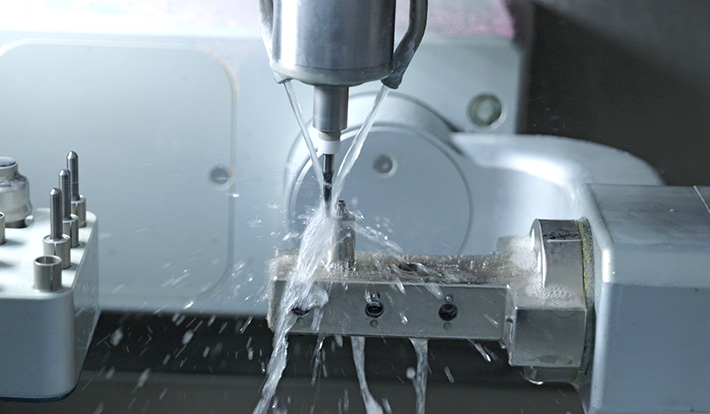
5. Cutting — Use professional dental CAD/CAM cutting equipment. Ensure sufficient cutting fluid. 

6. Morphological Trimming — Trim before calcination when glass ceramic is in purple state. 

7. Sintering — Strictly control sintering temperature and time per the curves below. 

8. Glazing — Use dental professional dye glazing paste.

Regulatory Information & Storage

【Storage】

 This product should be stored in a clean and dry room with no corrosive gases, good ventilation. 

【Shelf Life】

 10 years. 

【Disposal】

 1. Residual materials after processing shall be collected and transferred to waste recycling agency. 

2. Discarded prosthetics not used in patient's mouth can be handed to waste recycling agency. 

3. Discarded prosthetics removed from patient's mouth should be collected in yellow medical trash can and disposed as medical waste. 

4. Dispose of according to local regulations. 

【SSCP】 

The Summary of Safety and Clinical Performance (SSCP) can be downloaded from EUDAMED website per Regulation (EU) 2017/745. 

【Manufacturer】

 Shenzhen Yurucheng Dental Materials Co., Ltd. 

Room 101,201,301,401,501, Bldg. 4, YESUN Life & Health Tech Park,

 No.19 Linhui Rd., Kengzi St., Pingshan Dist., Shenzhen, Guangdong, China 

Tel: 86-755-84622395 Email: system@yucera.com 

【EU Authorized Representative】 

Umedwings Netherlands B.V. Treubstraat 1, 2288EG, Rijswijk, the Netherlands 

Tel.: +31(0) 642758955 E-mail: ar@umedwings.eu 

【Notice】

 Please report any serious incident in relation to the device to Shenzhen Yurucheng Dental Materials Co., Ltd. and the competent authority of the Member State of residence.

COLOR / TRANSMITTANCE SELECTION

Lithium Disilicate Color
A1A2A3A3.5A4B1B2B3B4C1C2C3C4
D2D3D4BL1BL2BL3BL40M10M20M3
Transmittance
HTLT
Size(mm)
15.5×11×13 (I12) 18*15*13 (C14) 40*15*15 (B40)10×12.5(Cylinder)11×12.5(Cylinder)13×12.5(Cylinder)

Recommended Sintering Curve

Sintering Curve Parameters

Dental Lithium Disilicate Glass-Ceramics One-stage Crystallization
Starting temp: 400℃Drying: 360sHeating rate: 45℃/minMax temp: 840℃Holding: 420sVacuum start: 550℃Vacuum end: 840℃
Two-stage Crystallization
Starting temp: 400℃Drying: 360sHeating rate: 45/30℃/minHold temp: 820/840℃Holding: 10/420sVacuum start: 550℃Vacuum end: 840℃
Glazing Procedure
Starting temp: 400℃Drying: 30sHeating rate: 40℃/minHold temp: 840℃Holding: 180sVacuum start: 550℃Vacuum end: 840℃

Physicochemical Properties

Classification (per ISO 6872:2024) : Type II ' Class 3
Density (post sintering) : 2.4~2.7 g/cm3
Flexural Strength (post sintering) : ≥300 MPa
Chemical Solubility (post sintering) : <100 μg·cm-2
Radioactivity :≤1.0 Bq·g-1
Coefficient of Thermal Expansion:(10.5±0.5) ×10-6K-1
Glass Transition Temperature:Tg: 500±20 ℃
Fracture Toughness: ≥1 MPa·m ¹/²
Technical Data
Download User Manual (IFU)

Do you have a question?
Or would you like to receive more information?

  • +86 18929399126
  • kaka.cao@yucera.com
Contact Us
  • Preferred Contact EmailPhone
  • Message*

  • * Required field
Contact us
×
* Required field
Direct Call
+86 18929399126
Thanks
Your info had been submitted.