


 中 文
中 文
How Dental Laboratories in Venezuela Are Using Our Zirconia Blocks: Real Case Feedback
2026-06-20
2026-06-22
The term CAD/CAM stands for:
In dentistry, this system is used to design and manufacture dental restorations such as crowns, bridges, veneers, and full-arch prosthetics with high precision and efficiency.
This beginner-friendly guide explains how dental CAD/CAM works, what equipment is involved, and why it has become essential in modern dental laboratories and clinics.
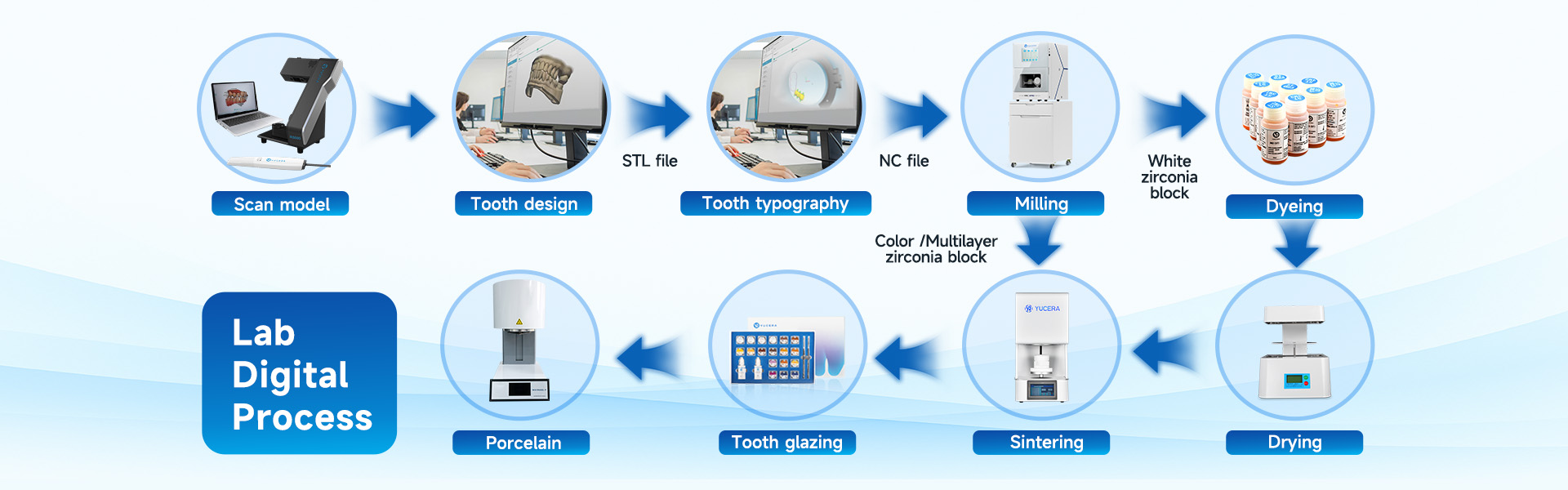
Dental CAD/CAM is a digital workflow that allows dentists and dental technicians to design and manufacture restorations using computer software and automated milling machines.
Instead of traditional hand-crafted methods, CAD/CAM uses digital scanning, 3D design, and precision milling to produce dental prosthetics.
It replaces traditional steps such as:
This results in faster, more accurate, and more consistent dental restorations.
A complete CAD/CAM workflow includes five main steps:
1️⃣ Scanning (Data Acquisition)
A digital scanner captures the patient’s oral structure or dental model.
2️⃣ CAD Design (Computer-Aided Design)
Special software is used to design the restoration (crown, bridge, veneer, etc.).
3️⃣ CAM Manufacturing (Milling Process)
A CAD CAM milling machine cuts the restoration from materials such as zirconia or ceramic blocks.
4️⃣ Sintering or Processing
For zirconia restorations, a sintering furnace is used to achieve final strength and density.
5️⃣ Finishing and Polishing
The final restoration is adjusted, polished, and prepared for clinical use.
Each material requires different milling strategies and machine settings.
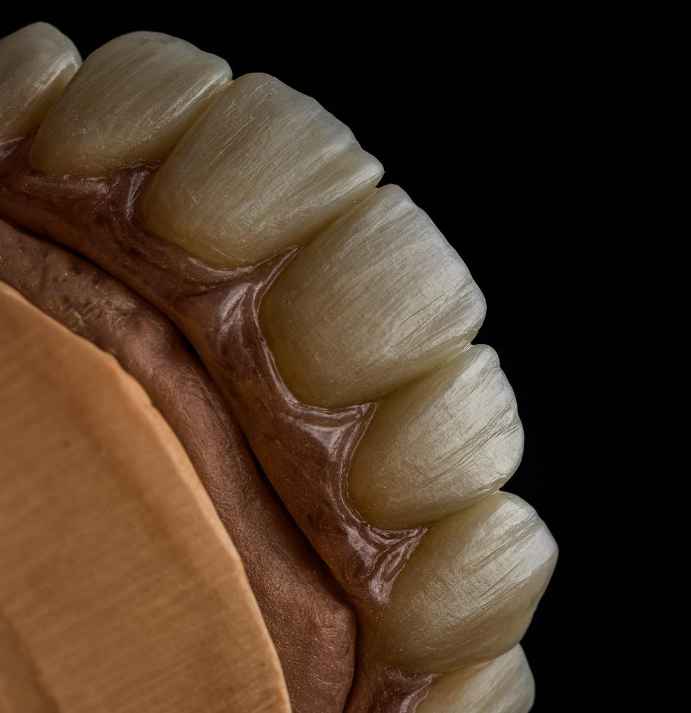
A complete dental CAD/CAM system includes:
Milling machine key parameters:
These factors directly affect accuracy, surface quality, and material compatibility.
👉 Suitable for single-unit restorations
👉 Focus on precision, stability, and batch production
Dental CAD/CAM technology offers several major benefits:
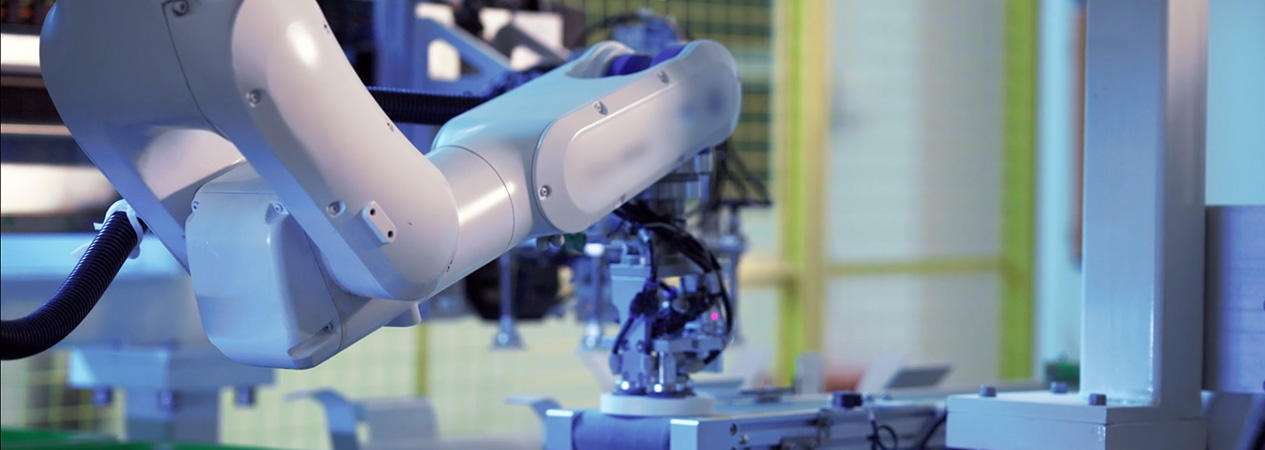
Dental CAD/CAM technology has completely transformed modern dentistry by introducing a fully digital workflow for designing and manufacturing dental restorations.
From scanning to milling and final restoration, every step is optimized for precision, efficiency, and repeatability.
For beginners, understanding CAD/CAM is the first step toward mastering digital dentistry and modern dental manufacturing systems.

Dry & wet milling for zirconia, PMMA, wax with auto tool changer.
learn more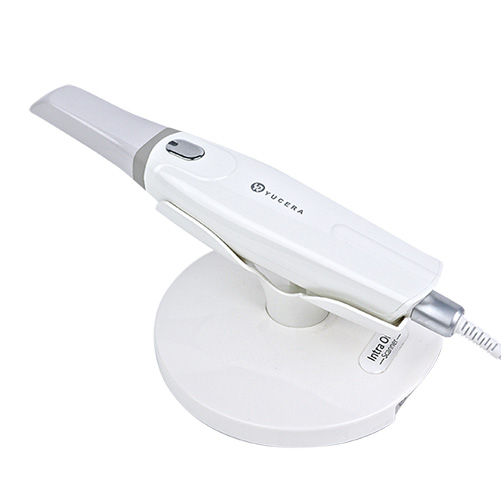
High-precision 3D scanning, AI calibration, full-arch accuracy.
learn more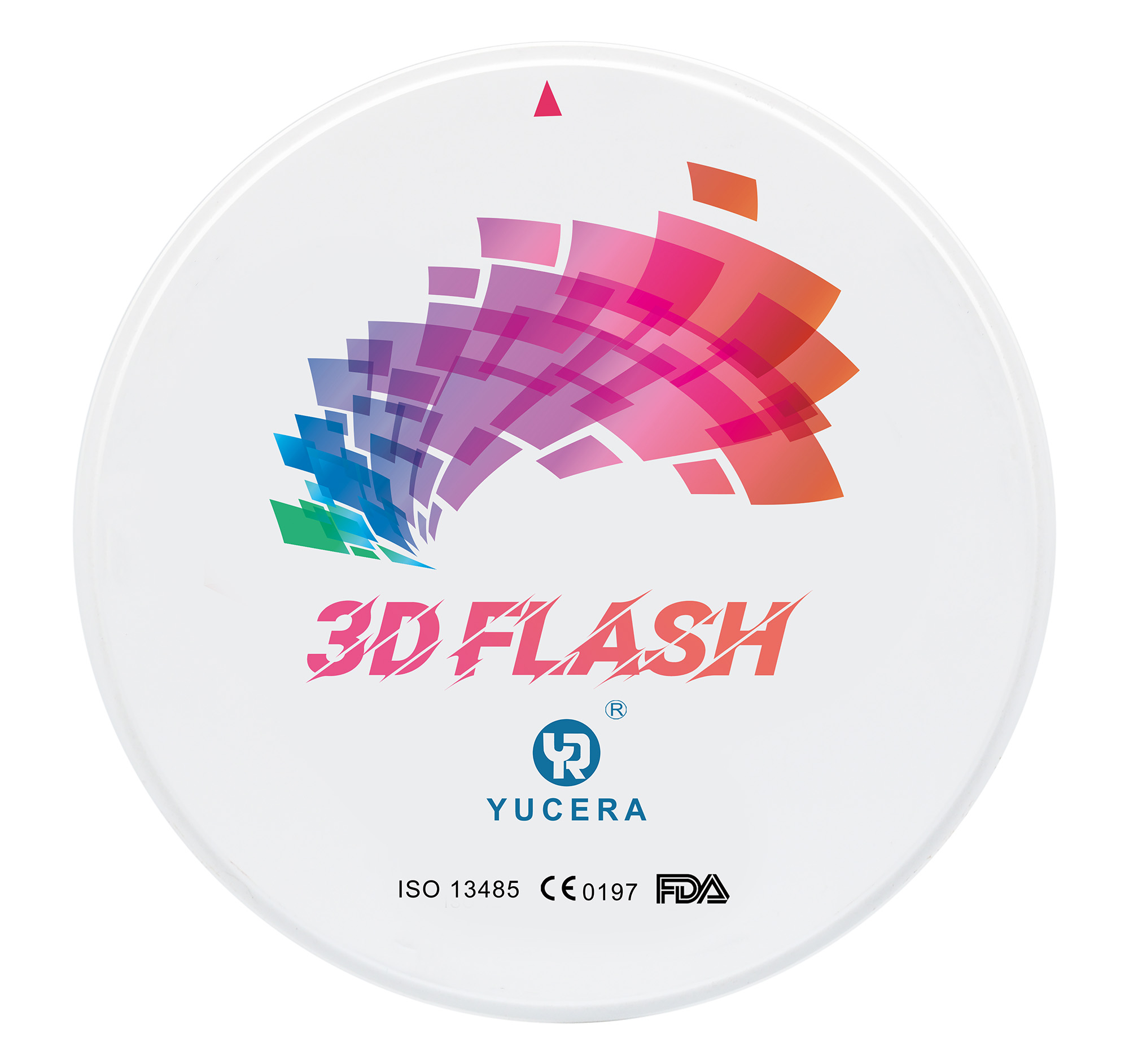
40-min full sintering with 57% incisal translucency and 1050 MPa strength.
learn more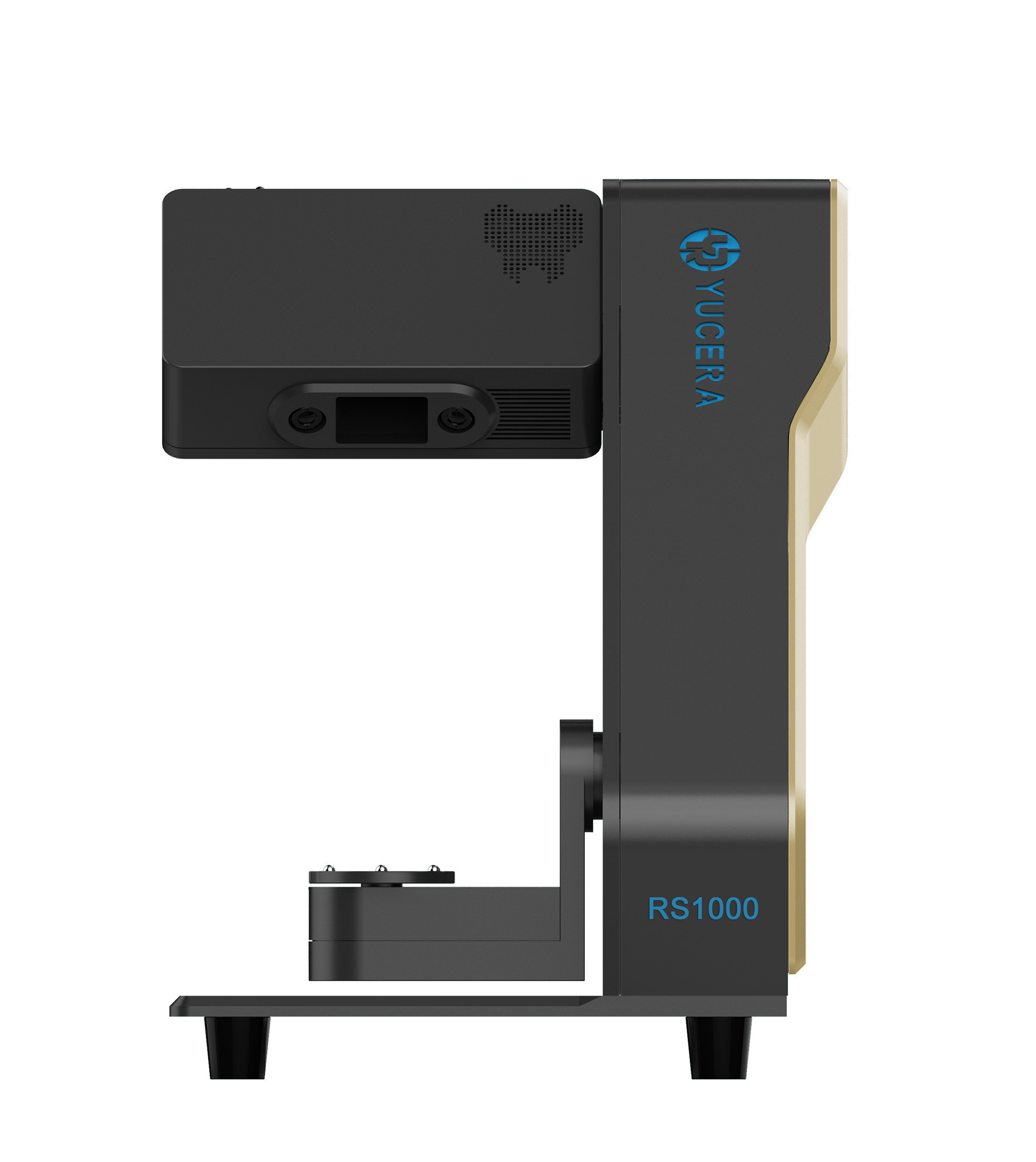
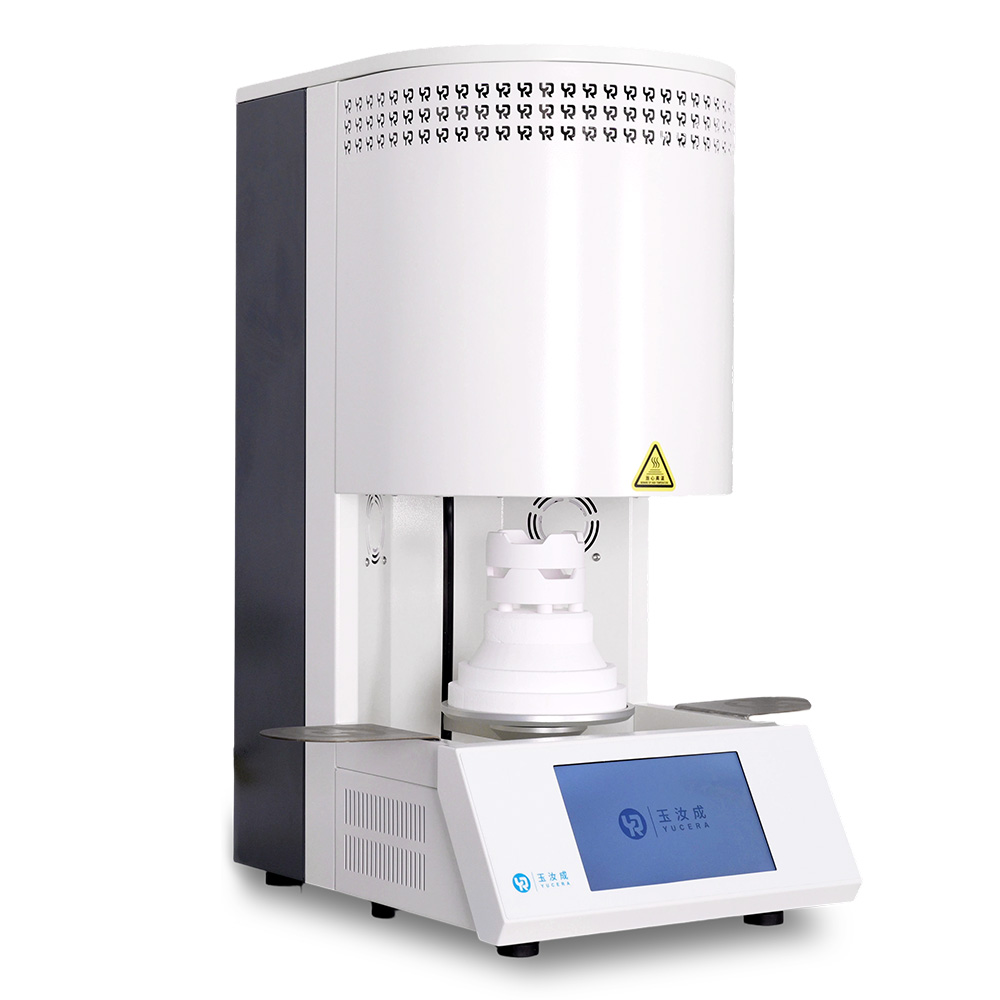
40-min cycle for 60 crowns, dual-layer crucible and 200°C/min heating.
learn more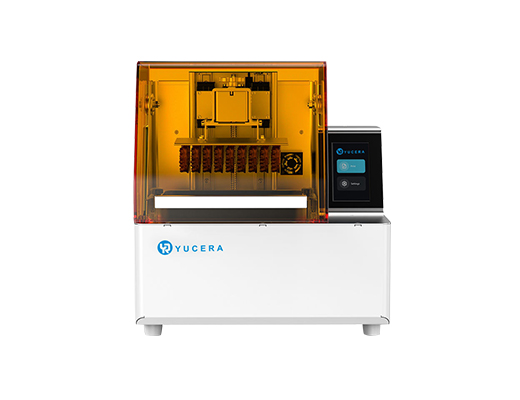
High-speed LCD printer for guides, temporaries, models with 8K resolution.
learn more


2026-06-20
2026-03-21
2025-03-23


