中 文
中 文
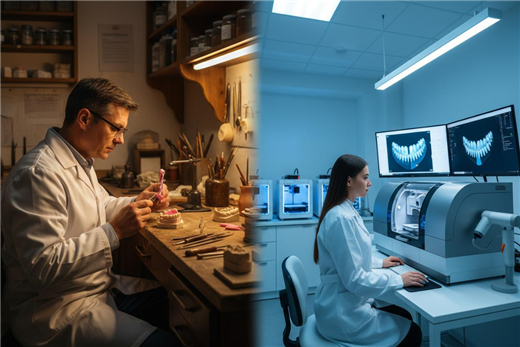
From Porcelain Furnaces to AI Dentistry: The Evolution of Dental CAD/CAM
2026-07-15
2026-04-28
3D printing has become a cornerstone of modern dental laboratories, speeding up the creation of diagnostic models, working dies, surgical guides, and aligner bases. Yet many labs continue to battle unstable printing results — warping, dimensional drift, layer inconsistencies, and poor repeatability — that lead to ill-fitting restorations, higher remake rates, and clinician frustration.
The good news is that most instability stems from fragmented processes rather than the technology itself. A comprehensive digital workflow optimization approach can transform inconsistent outputs into stable, predictable production that meets clinical demands.
Recent in vitro studies show that root mean square (RMS) deviations for 3D printed full-arch dental models commonly range from approximately 73 μm to 194 μm, with many falling between 109 μm and 140 μm. Water-washable resins have demonstrated lower mean RMS values (around 109 μm) compared to other formulations under standardized conditions. While these figures often remain within broadly accepted clinical thresholds (typically under 200–250 μm for diagnostic and prosthetic models), batch-to-batch variability and environmental influences frequently push results outside reliable tolerances.
Posterior regions, curved surfaces, and areas near supports tend to exhibit larger local deviations. Factors such as resin type, print orientation, layer thickness, and post-processing play significant roles in both trueness (closeness to the original scan) and precision (repeatability).
Common manifestations of instability include base warping, occlusal inaccuracies, marginal distortion, delamination, and progressive dimensional drift over multiple prints.
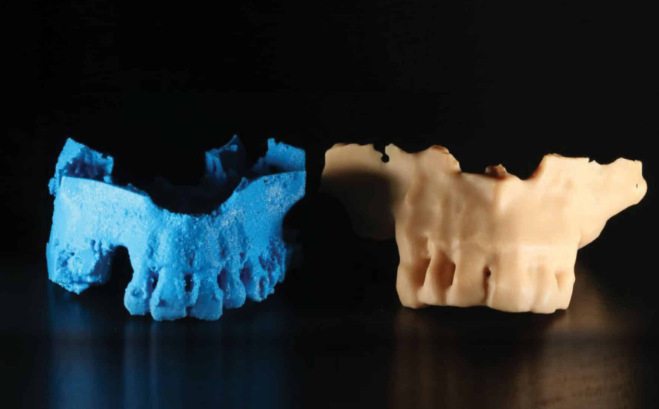
Instability usually arises from uncontrolled variables across the workflow:
Print orientation significantly influences results; certain angles increase support-related distortions or gravitational effects on large surfaces.
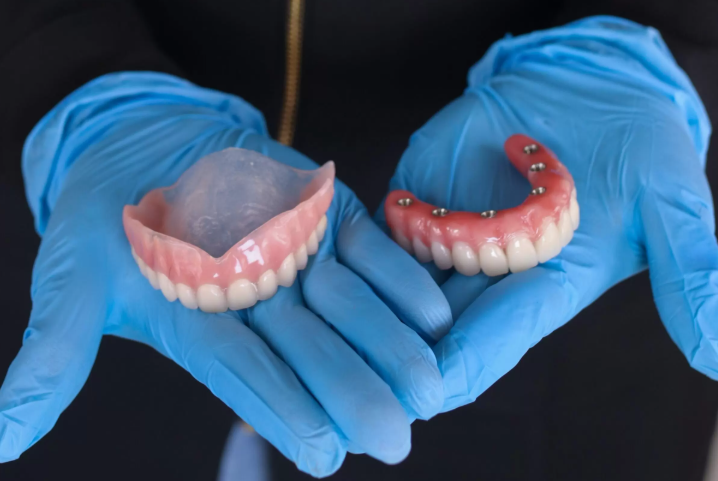
Successful laboratories treat 3D printing as a controlled manufacturing process. Here is a practical, step-by-step optimization framework:
1. Strengthen Upstream Digital Steps (Scanning & Design)
Accurate inputs are essential. Use high-precision intraoral or lab scanners and validate scans for completeness. In CAD software, apply automated mesh repair, enforce consistent design parameters, and incorporate known material shrinkage compensation factors. Create validated template libraries for different model types with optimized base designs and support strategies.
2. Implement Rigorous Printer Calibration & Maintenance
Establish daily or per-shift calibration routines:
Preventive maintenance reduces the majority of adhesion and uniformity issues.
3. Standardize Pre-Print Preparation and Slicing
Smaller layer thicknesses or optimized nozzle parameters in certain technologies can improve surface detail and reduce the staircase effect.
4. Control Post-Processing for Dimensional Stability
Post-processing is often the weakest link. Standardize:
Proper post-curing enhances mechanical properties while minimizing residual stresses that cause long-term instability.
5. Build End-to-End Standardized Operating Procedures (SOPs) and Quality Control
Labs that implement full standardization often achieve more predictable clinical outcomes and reduced material waste.
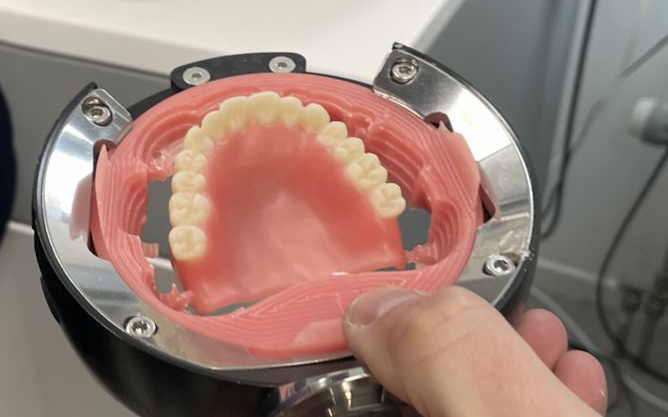
Define clear targets based on application. Many diagnostic and prosthetic models perform well under 150–200 μm overall RMS deviation, while surgical guides and high-precision components demand tighter tolerances. Use color-coded deviation maps alongside RMS values for comprehensive evaluation.
Begin optimization on high-volume items such as study or working models, then scale to more demanding applications. Conduct regular internal audits, review failure logs, and adjust parameters data-driven. Environmental control and staff training deliver compounding benefits over time.
A well-optimized digital workflow not only stabilizes 3D printing but also improves overall lab efficiency, shortens turnaround times, and strengthens relationships with clinicians through more consistent results.
Unstable 3D printed dental models are rarely an inherent limitation of the technology — they are usually symptoms of an unoptimized or fragmented workflow. By systematically optimizing every stage — precise scanning, robust file preparation, disciplined calibration, standardized parameters, controlled post-processing, and rigorous quality control — dental laboratories can achieve reliable, repeatable production that meets or exceeds clinical expectations.

Dry & wet milling for zirconia, PMMA, wax with auto tool changer.
learn more
High-precision 3D scanning, AI calibration, full-arch accuracy.
learn more
40-min full sintering with 57% incisal translucency and 1050 MPa strength.
learn more
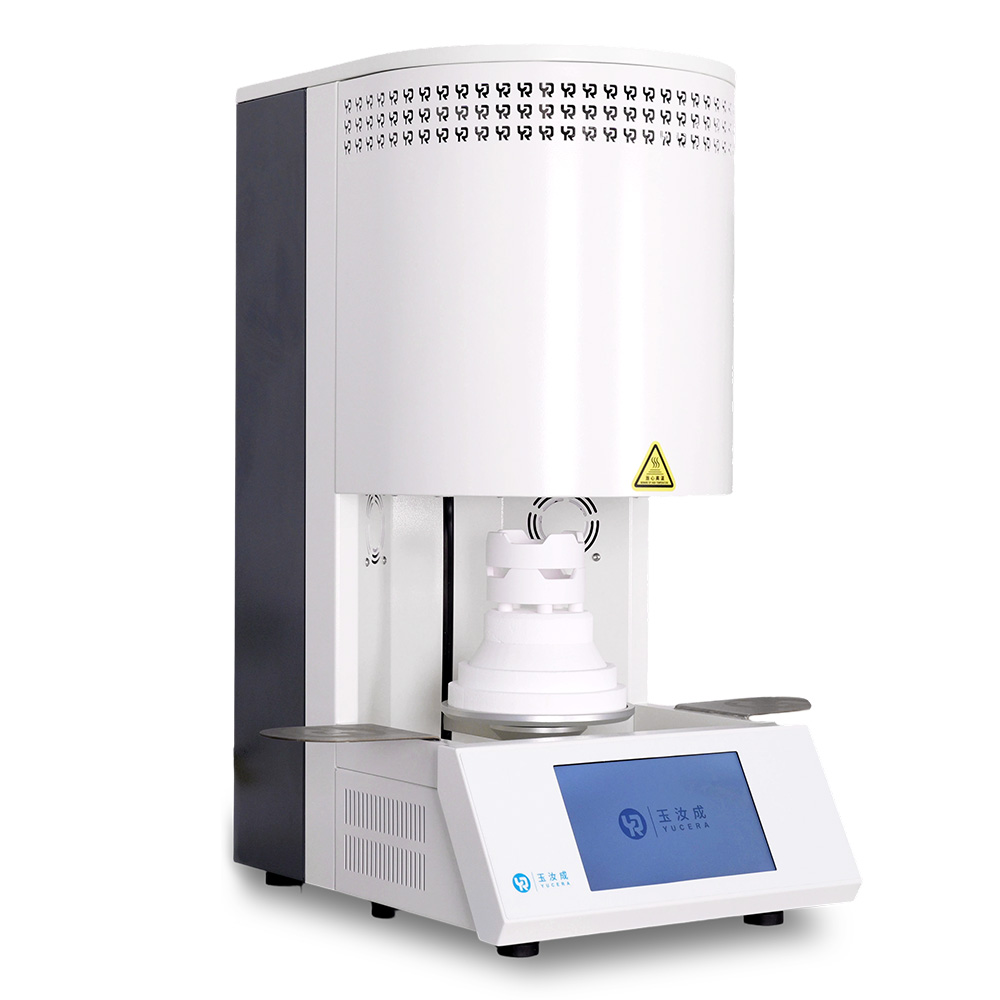
40-min cycle for 60 crowns, dual-layer crucible and 200°C/min heating.
learn more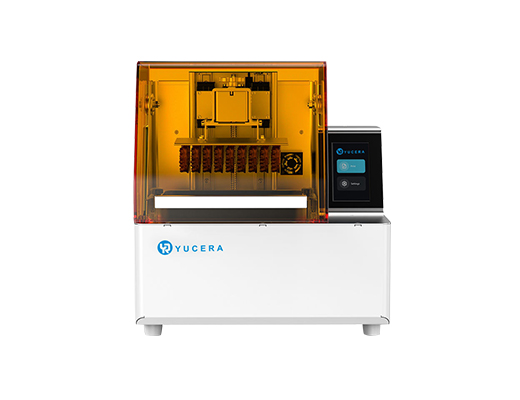
High-speed LCD printer for guides, temporaries, models with 8K resolution.
learn more