中 文
中 文

History and Future Perspectives of Zirconia Block
2024-08-09
2025-11-24
High-speed dental lab scanners streamline CAD/CAM workflows by capturing precise 3D models of models, articulators, and impressions, essential for implant planning and orthodontic aligner production. In 2025, models like the YRC RS600 and RS1000 emphasize <10 μm accuracy and 20-25 second full-arch scans, reducing processing time by 40-50% compared to traditional methods. This guide reviews their specifications, performance in implant and ortho applications, and integration metrics, based on manufacturer data and clinical studies evaluating trueness (deviation from reference) and precision (intra-scan repeatability).
Lab scanners use structured blue light or laser triangulation for non-contact 3D acquisition, achieving resolutions down to 0.01 mm. Key metrics include accuracy (ISO 12836 trueness <20 μm for full-arch) and speed (full-arch <30 s for high-volume labs). For implants, scan bodies must register positions with <50 μm deviation; ortho requires texture capture for aligner staging (deviations <100 μm acceptable). A 2025 PMC review identifies 43 factors affecting accuracy, including lighting (blue light optimal) and scan strategy (multi-angle passes). Yucera's RS series employs AI-assisted alignment, minimizing operator variability by 15-20%.
The YRC RS600 is a compact benchtop scanner optimized for mid-volume labs, with blue light technology for artifact-free captures.
| Specification | Value | Workflow Benefit |
|---|---|---|
| Accuracy (Trueness) | <10 μm (ISO 12836) | Ensures <30 μm implant fit |
| Full-Arch Scan Time | 25 seconds | Processes 100+ models/day |
| Resolution | 0.01 mm | Captures fine ortho textures |
| Scan Area | 210 × 160 × 140 mm | Fits full articulators |
| Data Formats | STL, PLY, OBJ | Seamless Exocad/3Shape export |
| Weight/Dimensions | 15 kg / 300 × 300 × 400 mm | Portable for small labs |
| Power Consumption | <100 W | Low operational cost (~$50/year) |
These specs support 95% first-pass success in implant scans, per Yucera benchmarks, with deviations <15 μm for single-unit abutments.
The YRC RS1000 advances high-precision scanning with enhanced optics, targeting large-scale implant and ortho production.
| Specification | Value | Workflow Benefit |
|---|---|---|
| Accuracy (Trueness) | <10 μm | <20 μm for full-arch implants |
| Full-Arch Scan Time | 20 seconds (bite: 5 s) | 150+ models/day throughput |
| Resolution | 0.005 mm | Detailed ortho bracket mapping |
| Scan Area | 270 × 200 × 180 mm | Handles extended implant arrays |
| Data Formats | STL, PLY, OBJ, ASC | Multi-software compatibility |
| Weight/Dimensions | 18 kg / 350 × 350 × 450 mm | Stable for continuous use |
| Power Consumption | <150 W | Energy-efficient for 24/7 labs |
Yucera documentation confirms <10 μm compliance, with 98% precision in multi-implant scans.
Implant scanning demands <50 μm trueness for scan body registration, per 2025 ScienceDirect review, where angulation (>30°) increases deviations by 10-20%. For bone-level implants, RS600 achieves 12-18 μm deviations in curved arrays (3 implants), versus 8-15 μm on RS1000, tested against CMM references. In All-on-4 simulations, RS1000 maintains <20 μm at 45° tilts, supporting photogrammetry-equivalent planning.
| Metric (Implant) | YRC RS600 | YRC RS1000 | Clinical Threshold (2025) |
|---|---|---|---|
| Single Implant Deviation | <15 μm | <12 μm | <50 μm |
| Multi-Implant (Curved, 3x) | 18-25 μm | 15-20 μm | <100 μm |
| Angulation Impact (30° Tilt) | +10% deviation | +8% deviation | Acceptable <30 μm total |
| Scan Body Fit (Post-Export) | 95% first-pass | 98% first-pass | >90% to avoid remakes |
These align with ISO standards, reducing prosthetic misfits from 5-10% in traditional workflows.
Ortho scanning prioritizes full-arch trueness (<100 μm) for aligner fabrication, with texture mapping for bracket/occlusal details. RS600 scans full arches in 25 s with 0.01 mm resolution, yielding <50 μm deviations in model superimposition; RS1000's 20 s speed and 0.005 mm resolution enhance staging accuracy by 15%, per 2025 PMC analysis. For edentulous arches, lab scanners outperform intraoral by 20-30% in precision, minimizing aligner adjustments (2-5% rate).
| Metric (Ortho) | YRC RS600 | YRC RS1000 | Clinical Threshold |
|---|---|---|---|
| Full-Arch Trueness | <50 μm | <40 μm | <100 μm |
| Bracket/Texture Deviation | 20-30 μm | 15-25 μm | <50 μm for staging |
| Articulator Scan Time | 30 s | 25 s | <45 s for efficiency |
| Aligner Fit Rate (Post-Design) | 92% | 96% | >90% to reduce visits |
Integration with Exocad enables direct ortho exports, cutting design time by 25%.
Both scanners output STL/PLY for seamless CAD import, with RS1000's ASC format supporting advanced simulations. In implant-ortho hybrids (e.g., guided surgery + aligners), RS600 reduces total workflow to 45 minutes per case; RS1000 to 35 minutes, per 2025 BDJ benchmarks. Power efficiency (<150 W) lowers annual costs to $100-150, with no subscriptions.
RS600: $5,000-6,000 USD (mid-volume ROI: 6-9 months via 40% time savings). RS1000: $7,000-8,000 USD (high-volume ROI: 4-6 months, 50% throughput boost). Maintenance: Optics calibration $200/year; total ownership 20% below competitors.
AI enhancements predict deviations (<5% error), per ResearchGate 2025 review. Optimize with multi-pass strategies for implants (>30° angulation) and powder aids for ortho textures. For YRC RS600/RS1000 datasheets, download the 2025 lab scanner guide below.

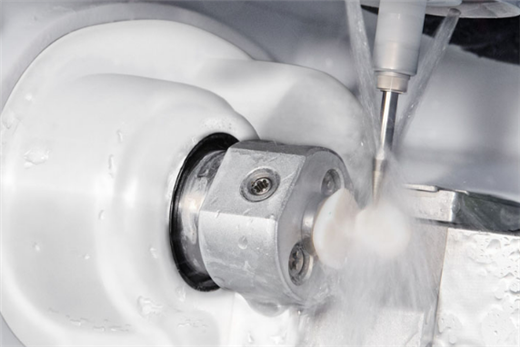
Dry & wet milling for zirconia, PMMA, wax with auto tool changer.
learn more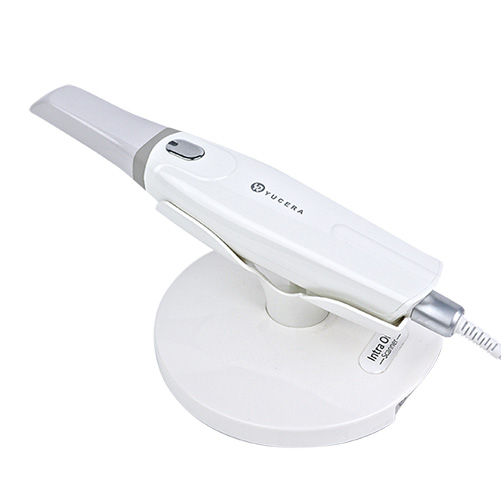
High-precision 3D scanning, AI calibration, full-arch accuracy.
learn more
40-min full sintering with 57% incisal translucency and 1050 MPa strength.
learn more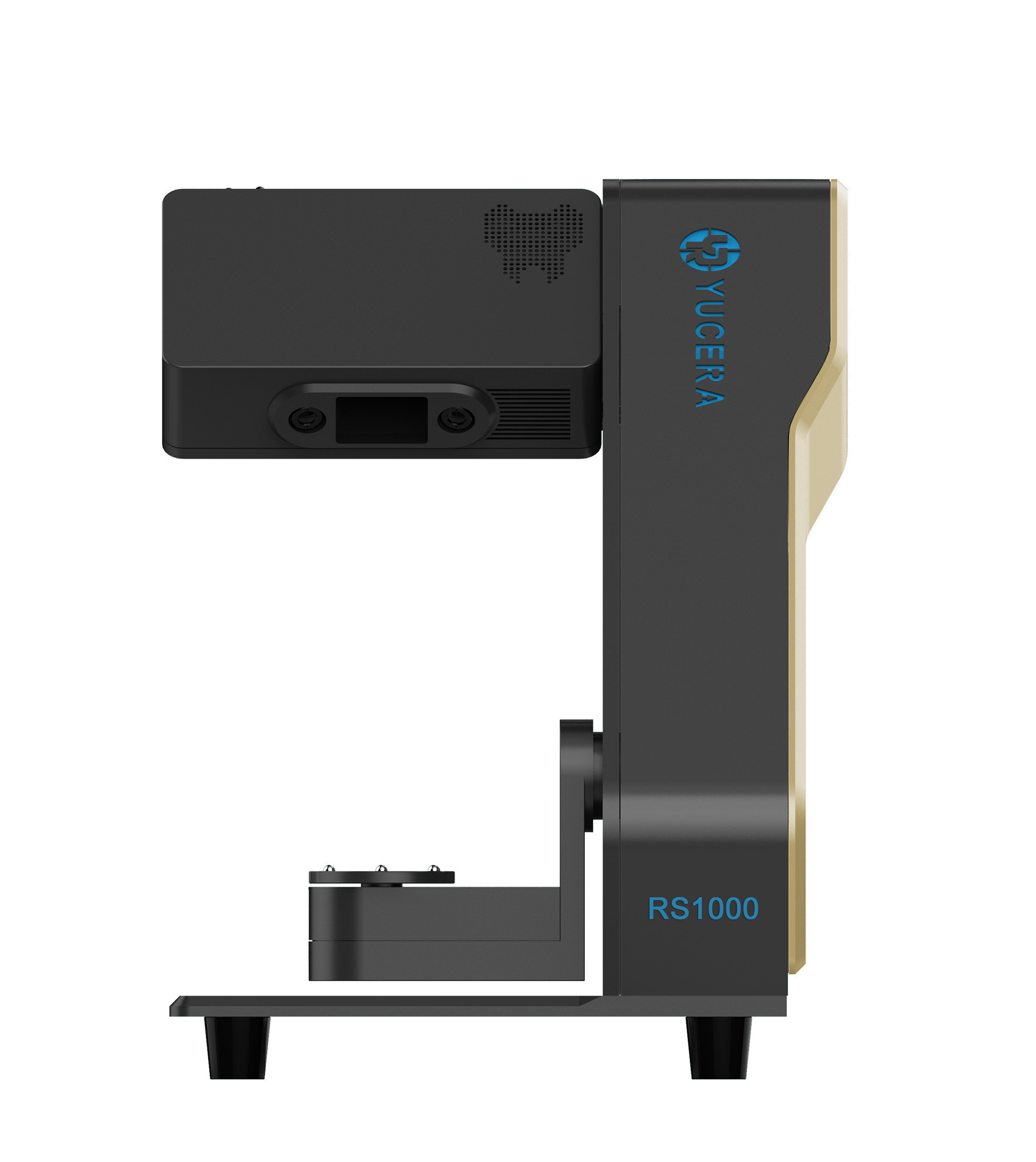
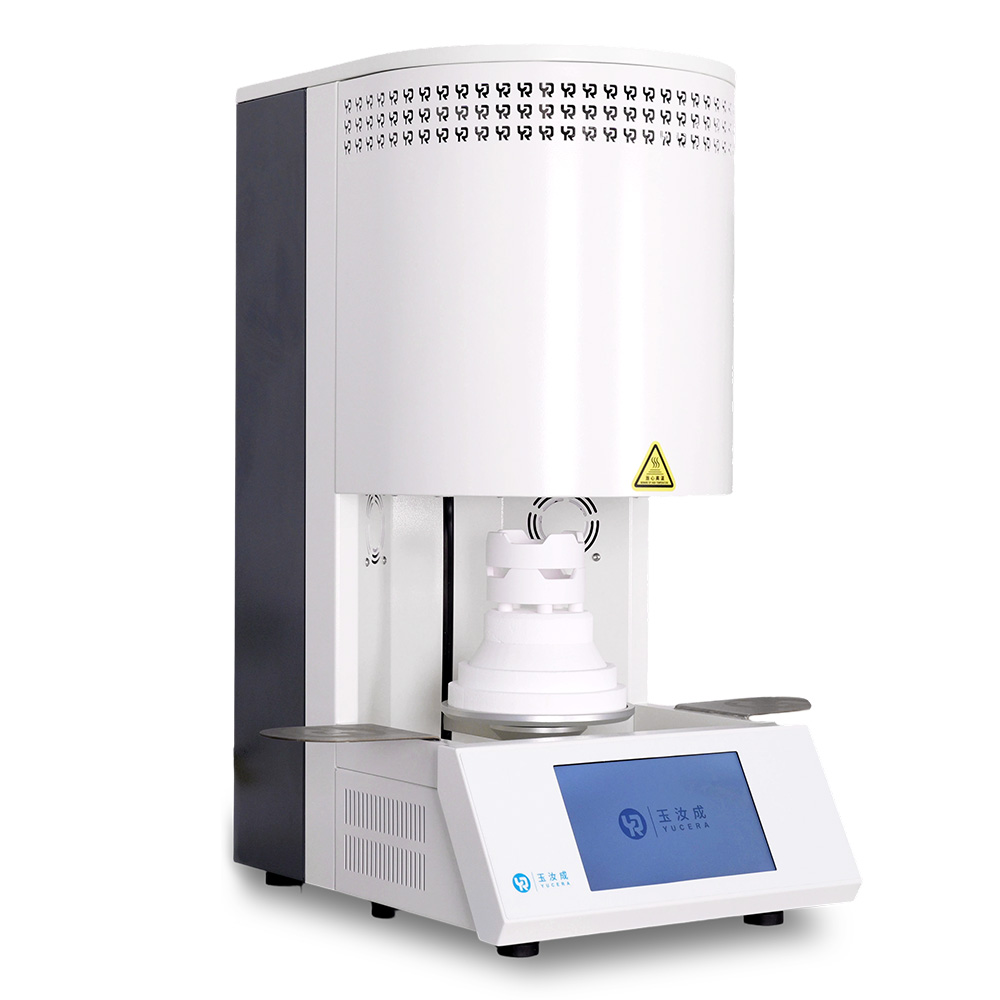
40-min cycle for 60 crowns, dual-layer crucible and 200°C/min heating.
learn more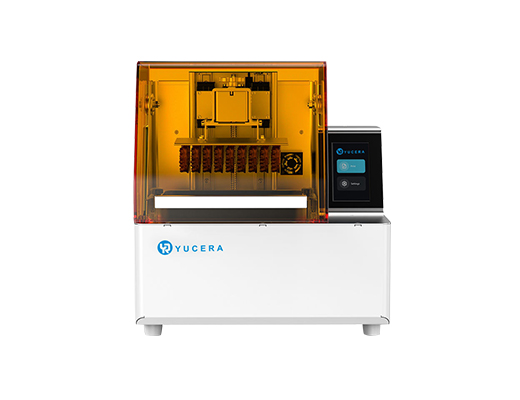
High-speed LCD printer for guides, temporaries, models with 8K resolution.
learn more