中 文
中 文
What Are the Disadvantages of CAD CAM Dentistry?
2025-10-11
2026-09-03
A dental milling machine is not simply a combination of individual components. Its performance depends on the coordination of multiple mechanical systems working together.
When the machine is divided by function, three core components define its overall performance:
These three elements form an integrated mechanical system:
The frame provides a stable reference platform, the drive system converts digital commands into precise movements, and the spindle delivers high-speed cutting power at the machining point.
Any weakness in one of these three areas can become a performance bottleneck, directly affecting the accuracy, surface quality, machining efficiency, and long-term stability of dental restorations.
Before exploring each component in detail, it is important to understand their fundamental roles:
| Component | Core Function |
|---|---|
| Frame | Provides structural stability and a rigid reference platform |
| Drive System | Converts control commands into precise mechanical movement |
| Spindle | Drives the cutting tool and performs the actual machining process |
Understanding these three roles provides the foundation for analyzing how they interact and influence each other.
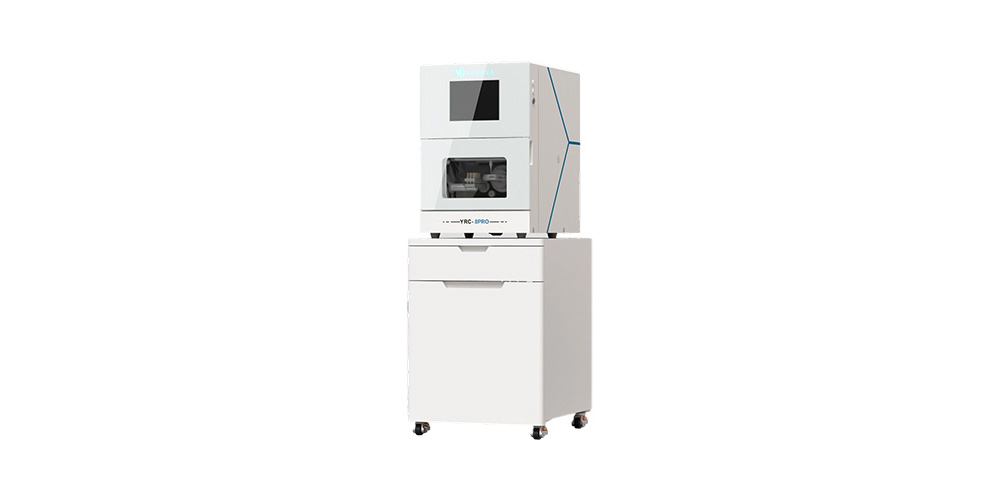
The frame, also known as the machine body or base structure, is the geometric reference foundation of the entire milling machine. It supports and aligns all critical components, including the spindle, drive system, and worktable.
Its performance directly determines the machine’s ability to maintain accuracy under different working conditions.
The frame provides mounting references for the spindle, guide rails, and worktable, ensuring accurate relative positioning between different components.
Since machining accuracy depends on the positional relationship between these elements, the structural stability of the frame becomes the foundation of the entire machine’s precision.
During milling, cutting forces generate mechanical loads that can cause deformation.
A rigid frame minimizes structural deflection, reducing problems such as:
This becomes especially important when machining high-strength materials that generate higher cutting resistance.
The material and design of the frame influence its vibration absorption capability and thermal deformation characteristics.
Common structural materials include:
Dental milling requires extremely high dimensional stability. Therefore, vibration control and thermal stability are essential for maintaining consistent accuracy during long machining cycles.
The frame also integrates and protects various systems, including:
These designs help isolate machining debris, reduce noise, and improve long-term machine reliability.
In simple terms: the frame determines whether the machine remains stable, vibration-resistant, and thermally consistent.
The drive system is responsible for converting CNC control instructions into accurate relative movement between the cutting tool and the workpiece.
It is the connection between digital design data and physical machining motion.
The drive system typically includes:
The drive system controls movement along:
Multi-axis movement enables the machine to reproduce complex anatomical geometries, including crowns, bridges, and implant restorations with highly curved surfaces.
Machining accuracy depends heavily on the precision of the transmission system.
Key factors include:
Any error within the transmission chain can directly affect the final restoration quality.
The rigidity and inertia of the drive system influence:
A responsive drive system allows the cutting tool to accurately follow CAM-generated toolpaths, especially during high-precision machining.
The drive system receives machining instructions generated by CAM software and transforms them into precise mechanical movements.
In simple terms: the drive system determines whether the tool moves exactly where the digital design requires.
The spindle system is the component that directly performs the machining process.
It converts electrical energy into rotational power and provides the cutting force required to remove material.
The spindle securely holds the cutting tool through systems such as:
Tool holding accuracy directly affects:
Dental milling requires high spindle speeds, commonly ranging from:
30,000–100,000 rpm
The spindle speed and performance directly influence:
Important spindle performance factors include:
These characteristics directly affect:
During high-speed machining, especially with hard materials, heat generation must be effectively controlled.
Spindle systems may integrate:
These help maintain cutting performance and improve tool life.
In simple terms: the spindle determines whether the machine can cut efficiently, accurately, and with excellent surface quality.
The performance of a dental milling machine does not depend on a single component. Instead, it comes from the coordination between the frame, drive system, and spindle.
Zirconia is a hard and brittle ceramic material. During machining, the milling process requires:
The spindle provides the necessary rotation speed, the drive system ensures smooth movement, and the frame maintains structural stability throughout long machining cycles.
Any instability may result in:
Titanium has high toughness and generates greater cutting resistance compared with ceramic materials.
During titanium machining, the machine requires:
Because cutting forces are significantly higher, the interaction between the frame, drive system, and spindle becomes even more critical.
A well-balanced system ensures:
The performance of a dental milling machine is determined by the interaction of three fundamental systems:
These three components work as a complete mechanical ecosystem.
A strong frame without a precise drive system cannot achieve accurate machining.
A powerful spindle without sufficient structural rigidity cannot maintain stability.
A precise motion system without adequate cutting performance cannot deliver efficient production.
Only through the coordinated performance of the frame, drive system, and spindle can a dental milling machine achieve the accuracy, reliability, and efficiency required for modern digital dental laboratories.

Dry & wet milling for zirconia, PMMA, wax with auto tool changer.
learn more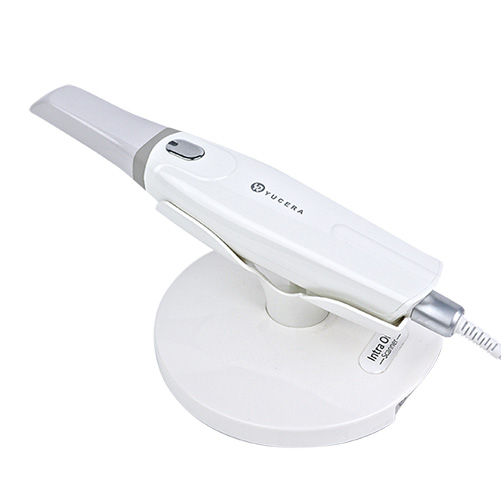
High-precision 3D scanning, AI calibration, full-arch accuracy.
learn more
40-min full sintering with 57% incisal translucency and 1050 MPa strength.
learn more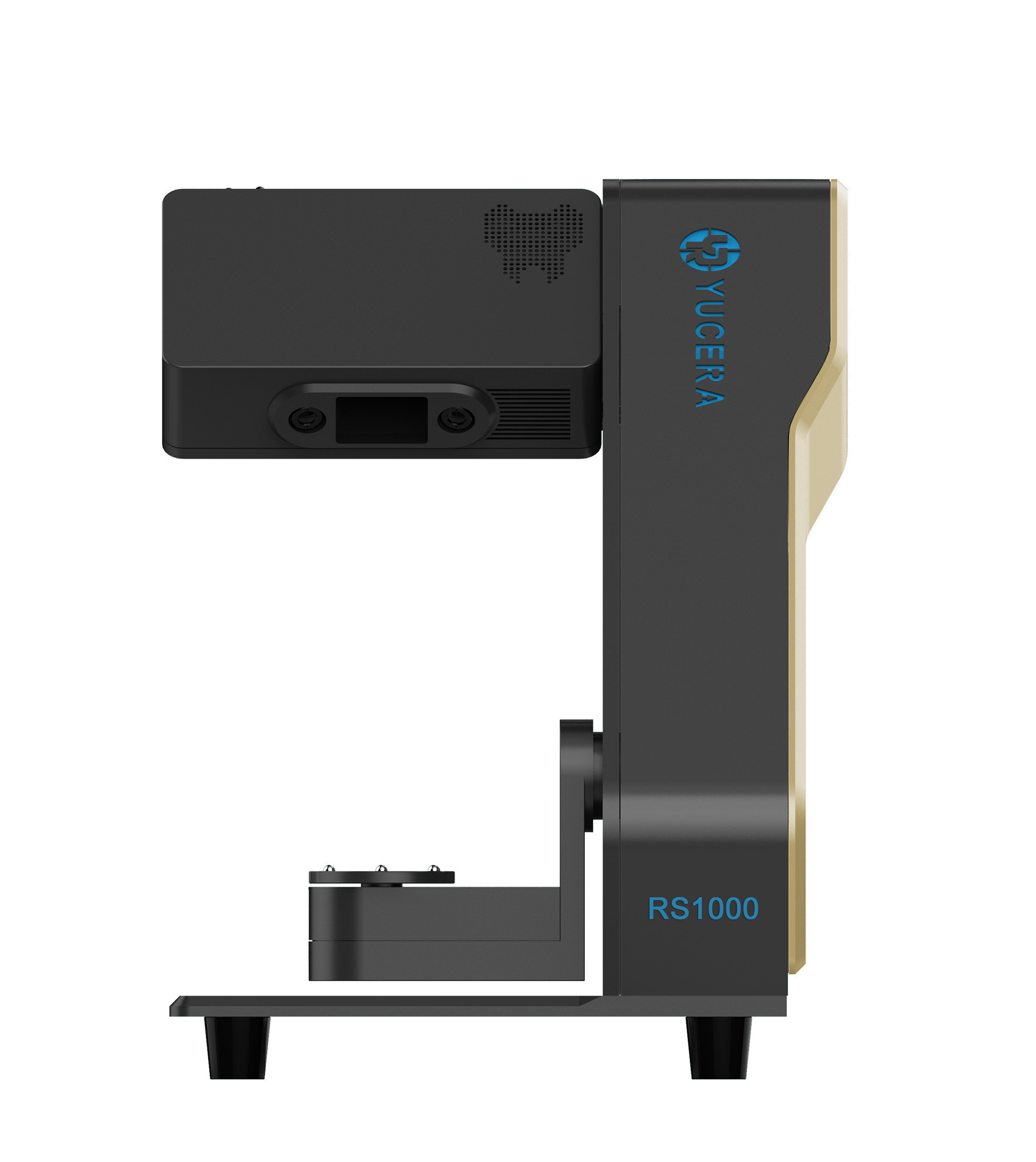
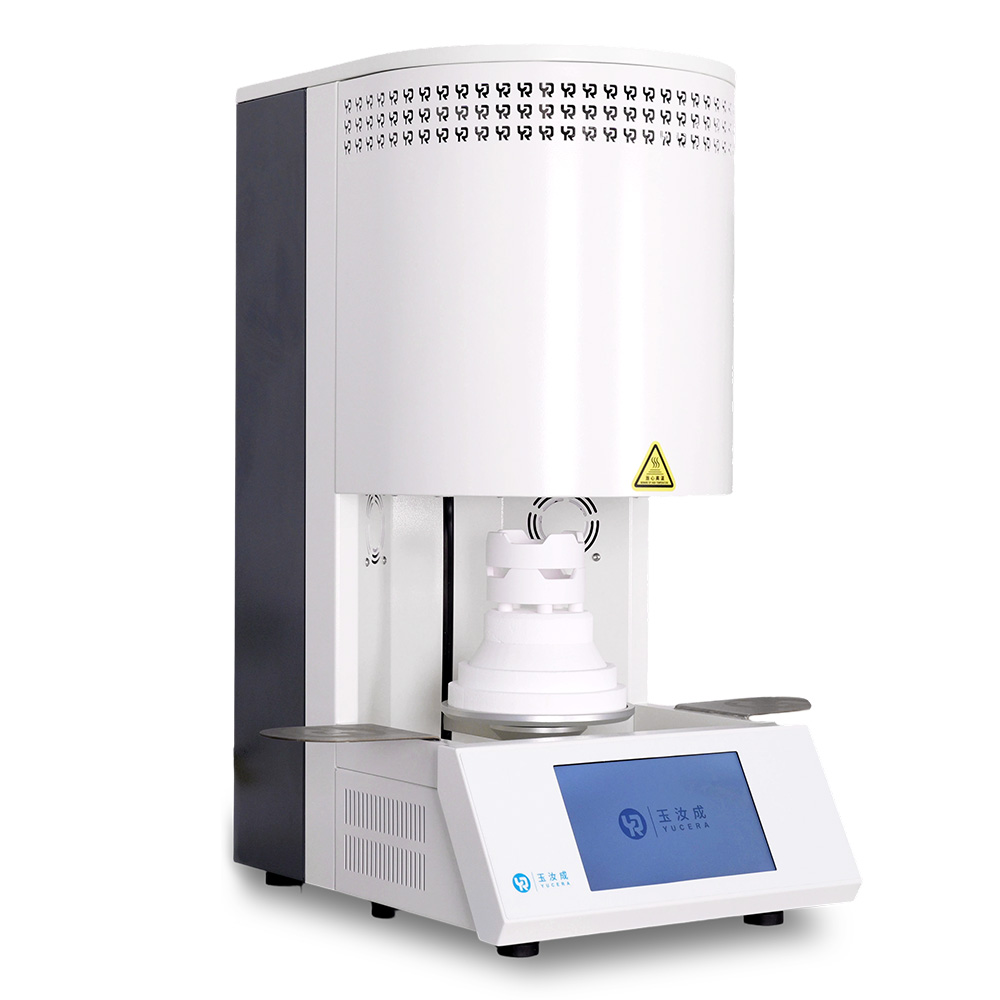
40-min cycle for 60 crowns, dual-layer crucible and 200°C/min heating.
learn more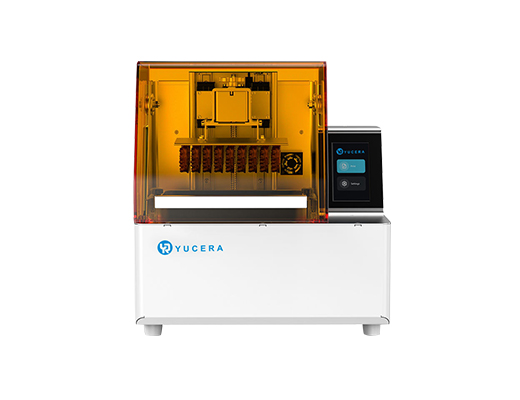
High-speed LCD printer for guides, temporaries, models with 8K resolution.
learn more