中 文

Comprehensive Guide on How to Design a Dental Lab
2025-03-27
2026-11-11
Automatic calibration is an important feature in modern dental 3D printers. It helps reduce manual adjustments, establish accurate positioning references, and maintain consistent printing conditions.
However, automatic calibration is not a single function. It can involve mechanical positioning, build platform leveling, optical system calibration, and temperature compensation.
For dental laboratories and clinics, understanding these functions helps users evaluate a printer's automation capabilities and determine how they contribute to printing accuracy.
Let's explore five important automatic calibration functions in dental 3D printers.
Automatic bed leveling, also known as automatic platform leveling, is designed to ensure that the build platform maintains the correct position relative to the printing plane.
If the platform is tilted or uneven, the distance between different areas of the platform and the reference plane may vary. This can lead to uneven first-layer formation, poor adhesion, or printing failures.
An automatic leveling system typically uses sensors to detect the height at multiple positions and establish a compensation map.
Its main functions include:
Detecting height differences across the build platform.
Identifying platform tilt or uneven positioning.
Generating leveling compensation data.
Adjusting the printing position through mechanical or software-based compensation, depending on the printer design.
It is important to note that automatic leveling does not always mean the printer physically adjusts the platform. Some systems detect the differences and compensate for them through software.
Z-axis automatic homing establishes the reference position of the printer's vertical movement system.
The Z-axis controls the vertical movement of the build platform or printing assembly. Before printing begins, the machine needs to identify a known starting position to ensure that subsequent movements are based on a defined coordinate system.
An automatic homing system generally uses limit switches, optical sensors, or other position-detection devices.
The process typically includes:
The Z-axis moves toward its designated reference position.
A sensor detects the reference point.
The system establishes this position as the Z-axis origin.
The printer uses this coordinate as the reference for subsequent movements.
Accurate homing is important because errors in the initial position can affect platform positioning and layer formation.
However, Z-axis homing and platform leveling serve different purposes. Homing establishes the coordinate reference, while leveling addresses the positional relationship between the platform and the printing plane.
Temperature changes can affect both the printing material and the mechanical components of a 3D printer.
For example, thermal expansion may slightly change the dimensions of mechanical components. In light-curing printing, temperature variations can also influence resin viscosity and curing behavior.
Temperature-related automation may include three different functions:
Temperature monitoring
Sensors monitor the temperature of specific components or the surrounding printing environment.
Automatic temperature control
If the printer includes a heating or cooling system, it can automatically regulate the temperature within a specified range.
Temperature compensation
More advanced systems may use temperature readings and predefined calibration data to correct relevant movement or dimensional parameters.
These functions should not be confused. Automatic temperature control does not necessarily mean that the printer performs dimensional compensation.
For dental applications, understanding which type of temperature management a printer supports is important when evaluating its actual calibration capabilities.

For LCD and DLP dental 3D printers, the optical system plays a direct role in determining how accurately the digital design is transferred into a physical object.
Even when the mechanical positioning system works correctly, variations in light intensity or optical performance may affect the curing process.
Optical calibration may involve:
Light intensity detection: Checking whether the light source delivers the required energy.
Light uniformity assessment: Identifying differences in light distribution across the printing area.
Exposure calibration: Adjusting exposure parameters to achieve appropriate resin curing.
Dimensional calibration: Checking the relationship between digital pixel dimensions and actual printed dimensions.
These processes help identify optical inconsistencies and establish appropriate printing parameters.
It is worth noting that not every printer automatically performs all these calibration procedures. Some require manual testing or periodic maintenance.
In addition to Z-axis positioning, some 3D printers also support automatic calibration of the horizontal movement system.
XY-axis calibration establishes the reference positions of the horizontal axes and, where applicable, corrects positioning offsets.
Vibration compensation is another related function. During printing, mechanical vibration may affect movement accuracy and surface quality, particularly in printers with moving mechanical assemblies.
Depending on the printer's architecture, calibration may include:
XY-axis origin detection.
Position offset correction.
Motion parameter adjustment.
Vibration measurement and compensation.
These functions are particularly relevant to printers with mechanical movement systems. Their implementation varies depending on the printing technology.
| Calibration Function | Main Purpose | Potential Benefit |
|---|---|---|
| Automatic platform leveling | Detects platform height differences | More consistent platform positioning |
| Z-axis auto homing | Establishes the vertical reference position | Accurate starting position |
| Temperature compensation | Corrects temperature-related variations | Reduced thermal influence |
| Optical calibration | Checks light output and distribution | More controlled curing conditions |
| XY-axis and vibration compensation | Corrects movement-related deviations | More consistent positioning |
Dental restorations and appliances often contain fine structures, thin walls, detailed margins, and precise fitting surfaces.
Even relatively small deviations in positioning, exposure, or material processing can affect the final result.
Automatic calibration helps address several potential sources of variation:
1. Reducing manual adjustment
Automated detection and calibration can reduce the number of positioning steps that operators need to perform manually.
2. Establishing repeatable printing conditions
By using defined reference positions and calibration parameters, the printer can start each printing job under more controlled conditions.
3. Reducing positioning-related errors
Functions such as platform leveling and Z-axis homing help address mechanical positioning issues before printing begins.
4. Supporting consistent production workflows
For dental laboratories handling multiple printing jobs, automated calibration can simplify equipment preparation and routine operation.
However, automatic calibration alone cannot guarantee the accuracy of a finished dental restoration. Actual results also depend on printer resolution, resin properties, exposure settings, support structures, post-processing, and the accuracy of the digital design.
When selecting a dental 3D printer, it is not enough to check whether the manufacturer lists automatic calibration as a feature.
It is more useful to understand exactly what the system can detect and correct.
Consider the following questions:
Does the printer automatically detect build platform height differences?
Can it establish the Z-axis origin without manual positioning?
Does it monitor temperature, and does it perform actual temperature-based compensation?
Can it detect or correct light source variations?
Are calibration results saved automatically or confirmed by the operator?
The answers help distinguish basic automated positioning from a more comprehensive calibration system.
Automatic calibration in dental 3D printers involves several different technologies rather than one universal function.
Automatic platform leveling and Z-axis homing primarily address mechanical positioning. Temperature compensation addresses thermal variations, while optical calibration focuses on light output and curing conditions. XY-axis calibration and vibration compensation provide additional motion-related corrections where applicable.

Dry & wet milling for zirconia, PMMA, wax with auto tool changer.
learn more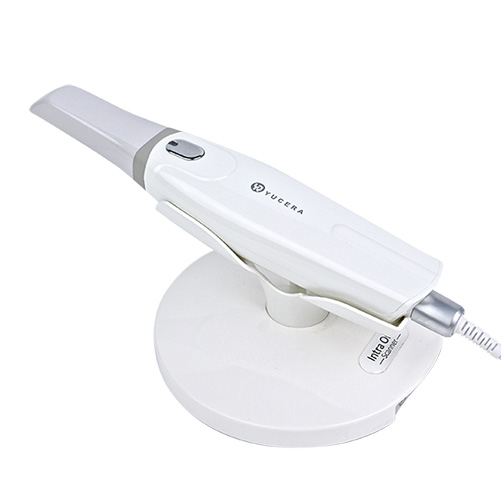
High-precision 3D scanning, AI calibration, full-arch accuracy.
learn more
40-min full sintering with 57% incisal translucency and 1050 MPa strength.
learn more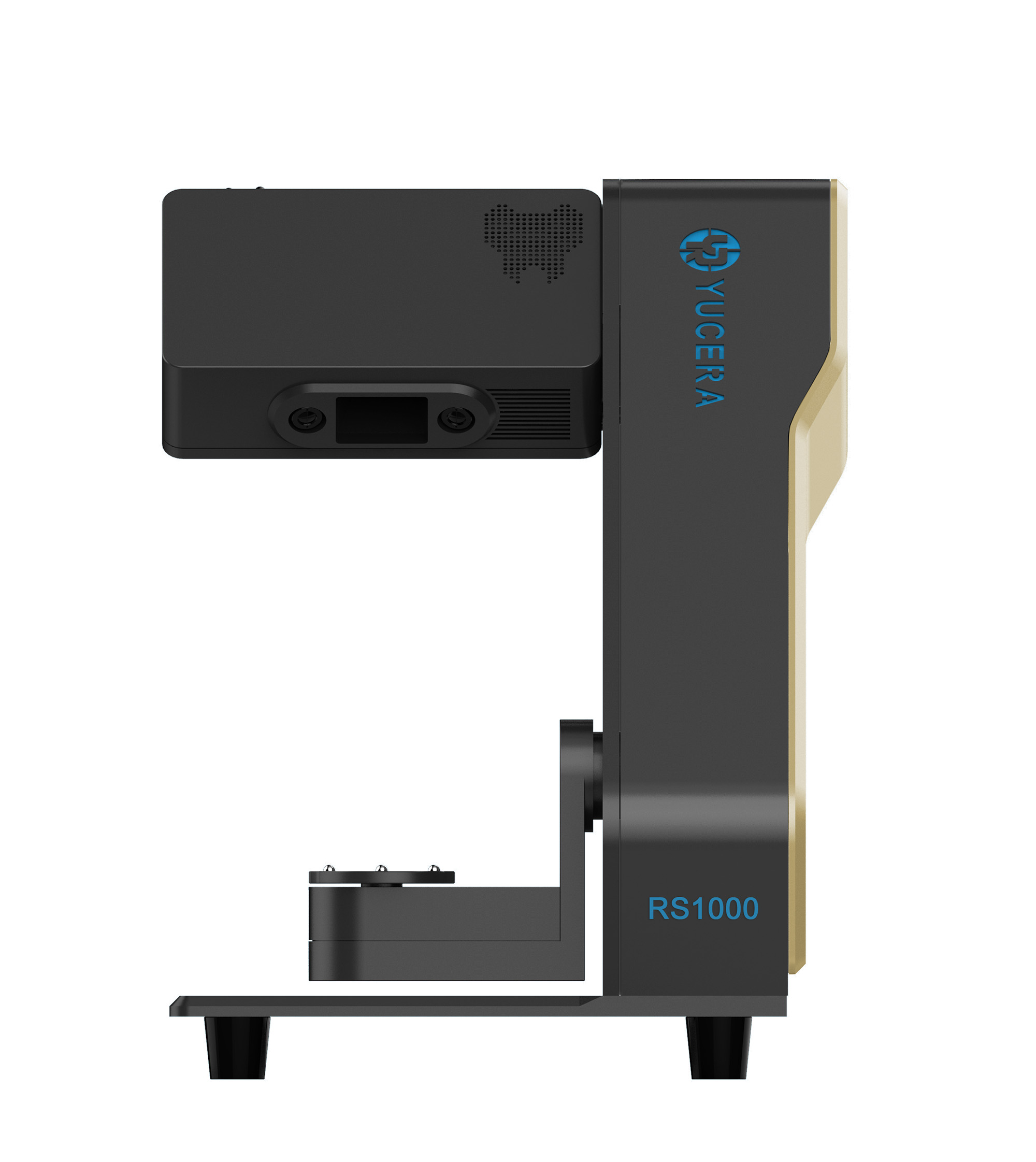
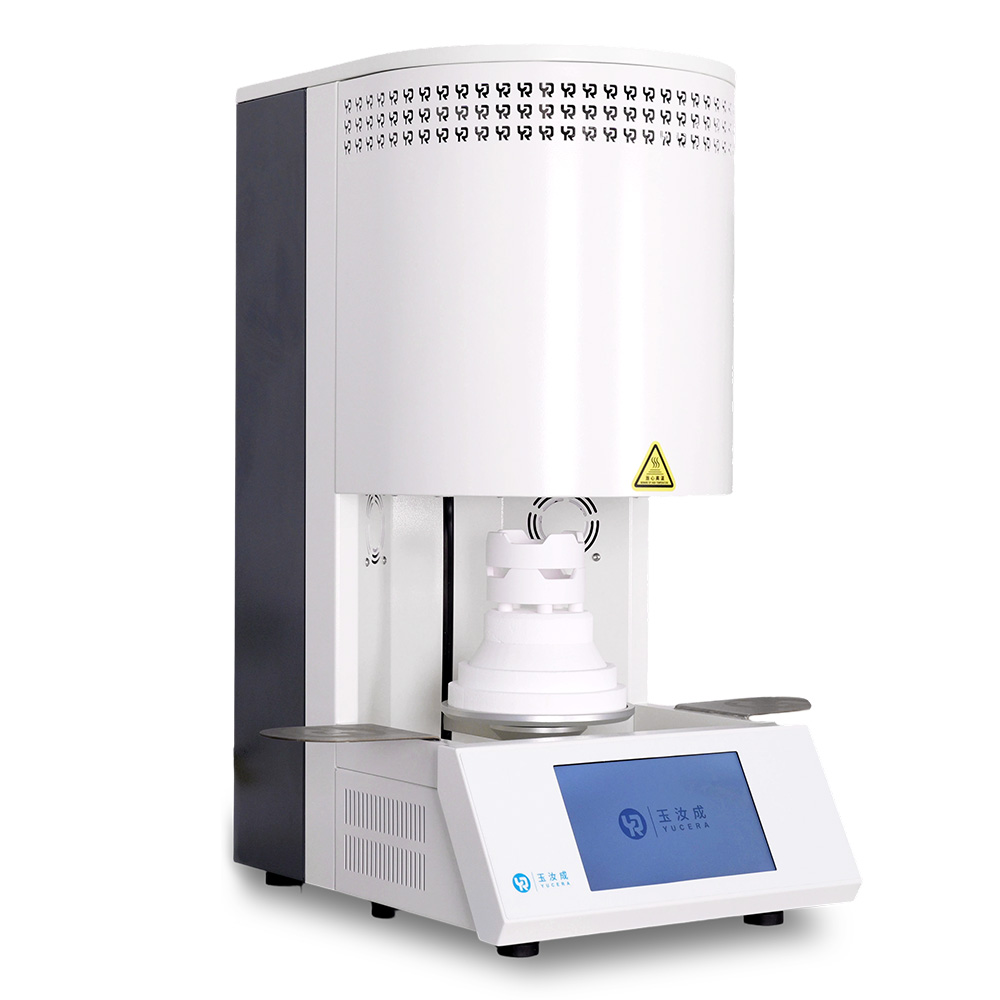
40-min cycle for 60 crowns, dual-layer crucible and 200°C/min heating.
learn more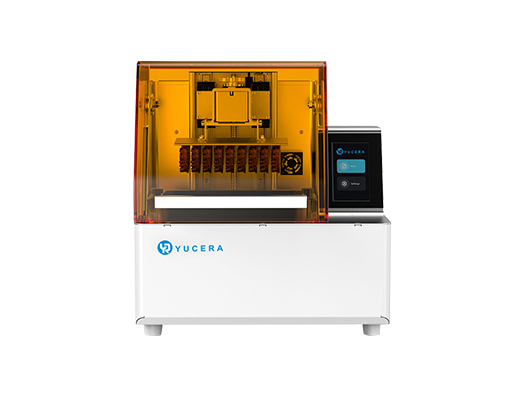
High-speed LCD printer for guides, temporaries, models with 8K resolution.
learn more