中 文
中 文
2025 Dental CAD/CAM Market: Essential Demands for Intraoral Scanners by Dentists Worldwide
2025-12-22
2025-11-27
Intraoral scanners (IOS) capture digital 3D models of teeth and oral structures, replacing traditional impressions with faster, more accurate workflows. For first-time buyers in 2025, understanding accuracy (typically <20 μm trueness per ISO 12836), scan speed (25-45 s full-arch), and practical tips ensures seamless integration into clinical practice. This guide outlines fundamentals, buying considerations, accuracy optimization strategies, and setup protocols, based on verified manufacturer specifications and clinical studies emphasizing micron-level precision and user-friendly designs.
IOS devices use structured light or laser triangulation to generate point clouds, processed into STL/PLY models via onboard software. Blue light variants (e.g., 405-460 nm wavelength) minimize soft tissue artifacts, achieving resolutions of 0.01-0.005 mm. For beginners, accuracy is defined as trueness (deviation from reference <20 μm) and precision (repeatability <10 μm), per ISO 20896-1 standards. Scan times average 25-45 s for full arches, with AI-assisted stitching reducing errors by 15-20% in challenging anatomies like edentulous jaws.
Key hardware includes a handheld wand (weight 200-250 g) with detachable tips (12-15 mm diameter for adult/pediatric use) and USB 3.0/Type-C connectivity for real-time previews. Software ecosystems (e.g., Exocad integration) support exports for CAD/CAM, with open formats ensuring 100% compatibility. A 2025 PMC review identifies 43 influencing factors, including operator technique and ambient light, underscoring the need for consistent calibration.
First-time buyers should prioritize scanners balancing cost ($20,000-50,000 for entry-level), accuracy (<20 μm), and ease of use (wireless options with 1-3 hour battery life). Wireless models reduce cable drag, improving ergonomics for prolonged sessions, while wired variants offer stable data transfer (up to 5 Gbps via USB 3.0). Compatibility with existing systems (e.g., Exocad/3Shape) avoids vendor lock-in, with open STL exports standard in 95% of 2025 models.
Patient comfort factors include tip size (11-12 mm for pediatrics) and weight (<230 g), reducing gag reflex by 40-50% versus impressions. Maintenance involves autoclavable tips (up to 200 cycles) and daily calibration, with annual costs $200-500 for optics cleaning. For the YRC-S03, a beginner-friendly option at $2,500-3,000 (wholesale MOQ=1), features CMOS sensors for <20 μm accuracy and detachable tips for high-temperature disinfection (134℃, 15 min).
| Buying Factor | Key Specs for Beginners | Impact on Practice | Cost Range (2025) |
|---|---|---|---|
| Accuracy (Trueness) | <20 μm (ISO 12836) | <5% remake rate | Included in base price |
| Scan Speed (Full Arch) | 25-45 s | 2-3x faster than impressions | Premium for <30 s ($5,000+) |
| Connectivity | USB 3.0/Type-C, Wireless | Real-time previews, no cables | Wireless +$1,000-2,000 |
| Tip Ergonomics | 11-12 mm, <230 g wand | 40-50% less patient discomfort | Pediatric tips +$100/set |
| Software Integration | Open STL/PLY, Exocad compatible | Seamless CAD export | Modular licenses $1,000-3,000 |
Achieving micron-level accuracy requires protocol adherence: Calibrate daily using reference objects (e.g., sphere or arch phantom) to maintain <10 μm repeatability. Scan in ambient light <500 lux to avoid reflections; for metallic surfaces, apply opacifying powder (titanium dioxide-based, 10-20 μm layer) to enhance contrast by 30%.
Operator technique: Use continuous, overlapping passes (50-70% overlap) at 2-5 cm distance, starting from occlusal surfaces to lingual/buccal. Avoid fast speeds (>5 cm/s), which increase deviations by 10-15%; aim for 25-45 s full-arch. For YRC-S03, AI calibration auto-adjusts for saliva artifacts, yielding 13-20 μm trueness in 95% of beginner scans after 10 sessions. Post-scan verification: Overlay models in software (deviation heatmaps <50 μm green zones) to catch 90% of errors pre-milling.
| Accuracy Tip | Protocol Detail | Expected Improvement | Common Pitfall Avoided |
|---|---|---|---|
| Daily Calibration | Reference phantom, 5-min routine | <10 μm repeatability | Drift from temperature changes |
| Powder Application | 10-20 μm layer, dry 30 s | 30% contrast boost | Reflections on wet surfaces |
| Scan Path Strategy | 50-70% overlap, 2-5 cm distance | <20 μm full-arch trueness | Gaps in edentulous areas |
| Speed Control | <5 cm/s, 25-45 s arch | 10-15% deviation reduction | Blurring from rushed passes |
| Verification Overlay | Heatmap analysis post-scan | 90% error detection | Undetected marginal mismatches |
Initial setup: Pair with a dedicated laptop (Intel i5+, 16 GB RAM, NVIDIA GPU for rendering) via USB 3.0 for <1 s latency. Install software (e.g., YRC-S03 suite) with auto-updates; test with phantom scans to baseline accuracy (<20 μm). For infection control, autoclave tips at 134℃ (up to 200 cycles) and wipe wand with IPA (70%) daily.
Maintenance: Weekly optics cleaning (microfiber + compressed air) prevents 80% of dust-induced errors; annual service checks calibration (cost $200-300). Battery models (YRC-S03: 48-55 min runtime) charge in 90 min; monitor for <70% capacity after 900 cycles, replacing at $179. Firmware updates quarterly enhance AI features, improving stitch quality by 10-15%.
| Setup/Maintenance Step | Tools/Procedure | Frequency | Cost/Benefit |
|---|---|---|---|
| Hardware Pairing | USB 3.0, i5+ laptop | Initial + monthly test | <1 s latency, $0 ongoing |
| Tip Sterilization | Autoclave 134℃, 15 min | Per patient (200 cycles/tip) | 95% infection control |
| Optics Cleaning | Microfiber + air | Weekly | 80% error prevention, $10/year |
| Battery Monitoring | Capacity check via software | Quarterly | $179 replacement after 900 uses |
| Firmware Update | Auto-download | Quarterly | 10-15% stitch improvement |
Entry-level IOS like YRC-S03 yield ROI in 6-12 months via 2-3x faster impressions ($50-100 savings/case) and <5% remakes. Applications: Crowns (95% fit accuracy), orthodontics (aligner staging <100 μm), implants (scan body <50 μm). Beginners report 40-50% patient satisfaction gains from powder-free options.
Trends include wireless AI models (3-hour runtime) and powderless scanning (95% success). For first-timers, start with YRC-S03 for its CMOS accuracy and $2,500-3,000 price; prioritize calibration and overlap for <20 μm results. Download the 2025 IOS setup checklist below for protocols and templates.

Dry & wet milling for zirconia, PMMA, wax with auto tool changer.
learn more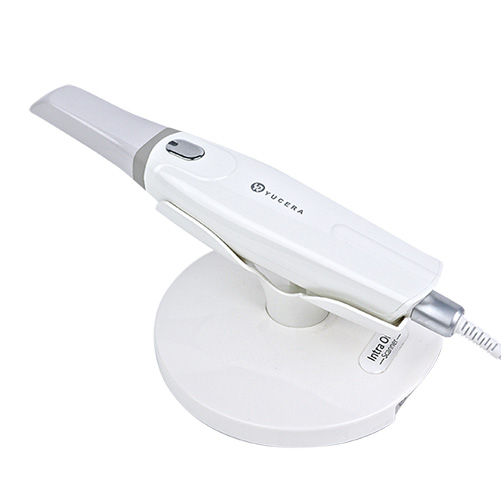
High-precision 3D scanning, AI calibration, full-arch accuracy.
learn more
40-min full sintering with 57% incisal translucency and 1050 MPa strength.
learn more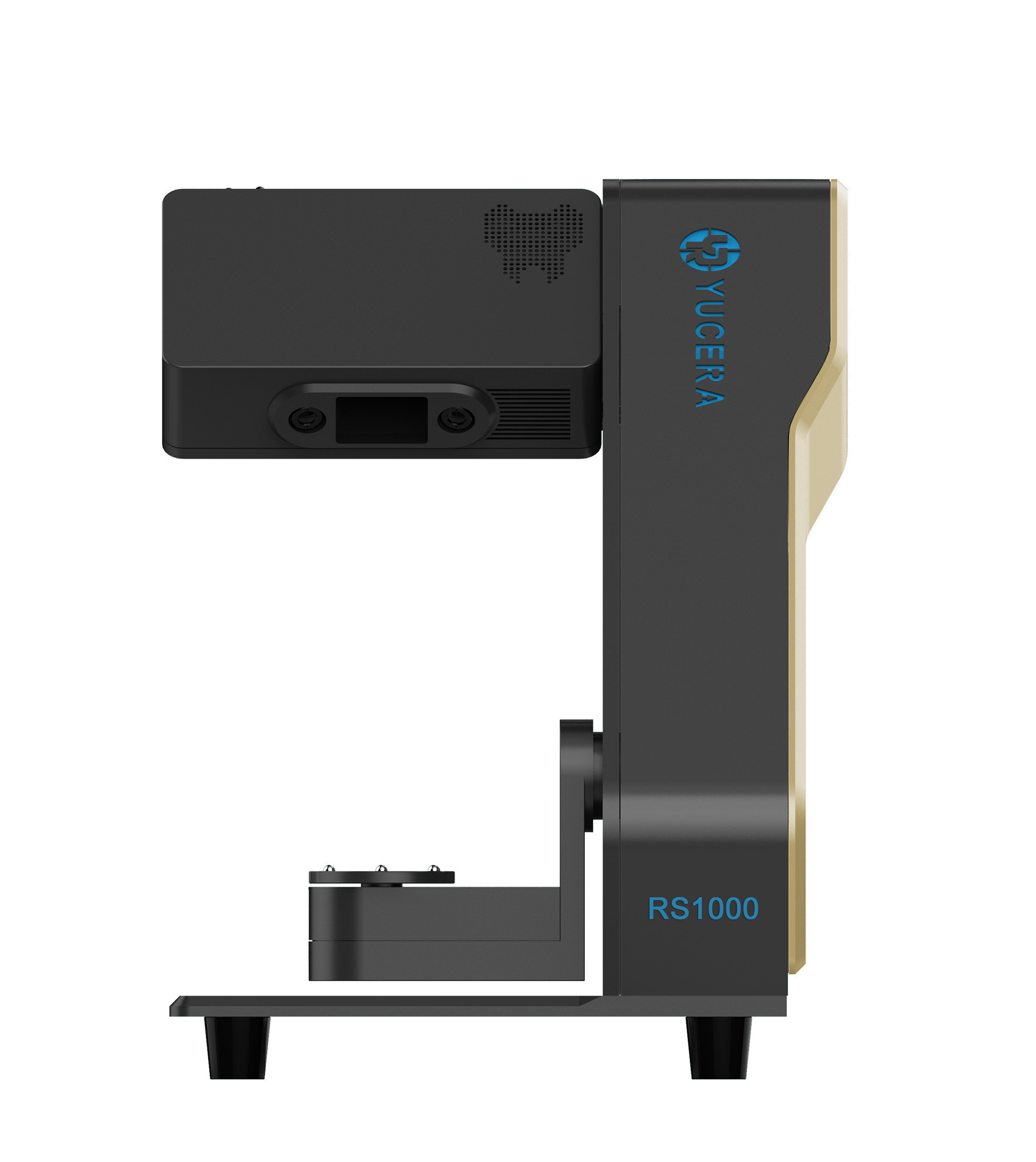
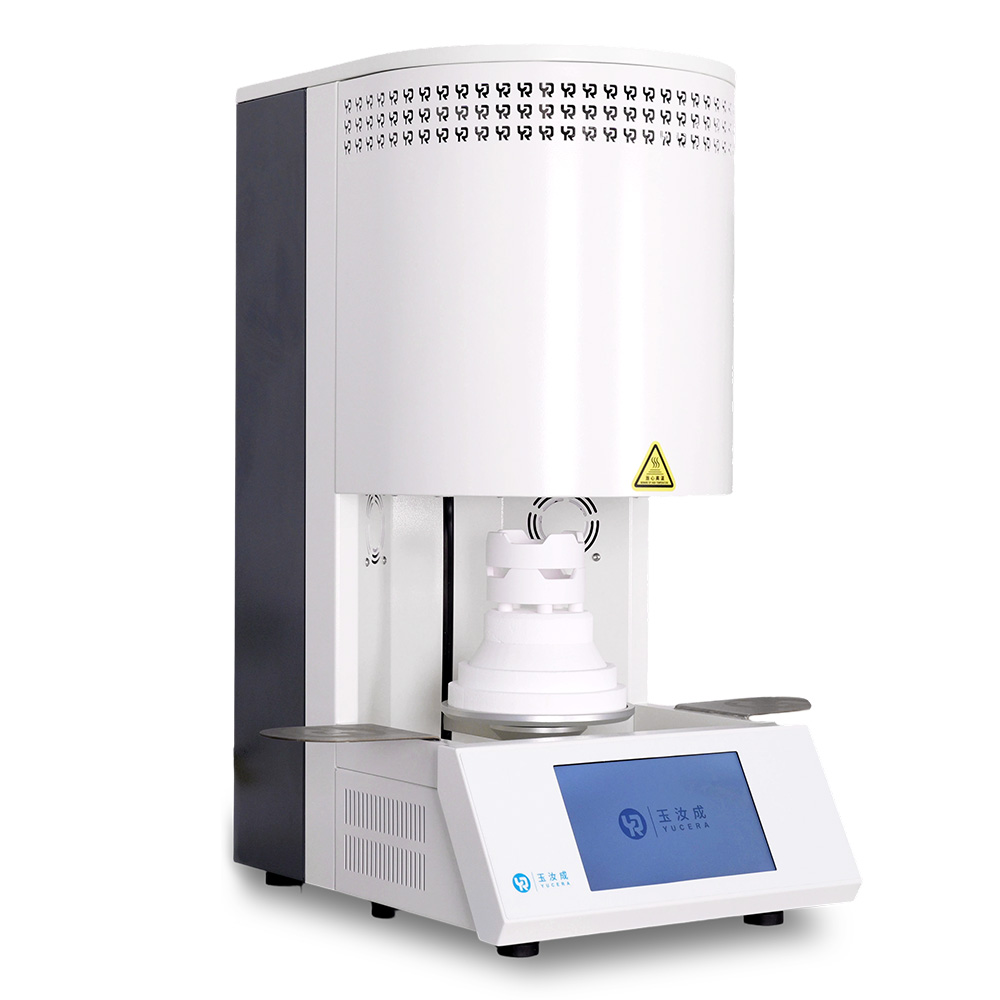
40-min cycle for 60 crowns, dual-layer crucible and 200°C/min heating.
learn more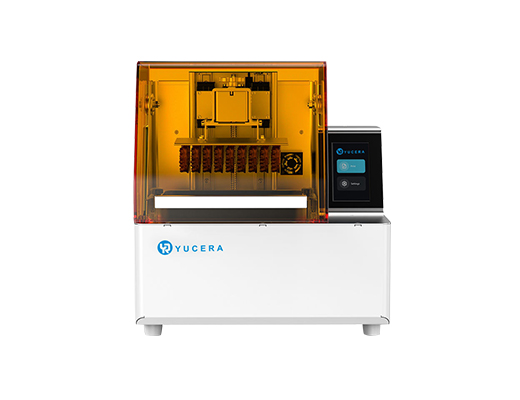
High-speed LCD printer for guides, temporaries, models with 8K resolution.
learn more