


 中 文

Asia-Pacific Dental CAD/CAM Explosive Growth: Opportunities and Challenges in China and India
2026-01-18
2026-10-21
Dental zirconia restorations are milled from pre-sintered zirconia blocks and then fired at high temperatures to achieve their final density and strength. During this process, the restoration becomes smaller as the material densifies.
But how can a zirconia crown or bridge shrink by a predictable amount and still achieve the dimensions designed in CAD software?
The answer is not simply the sintering temperature. Predictable zirconia shrinkage is the result of material formulation, powder processing, pre-sintered density, sintering conditions, dimensional measurement, and CAD/CAM compensation working together.
Pre-sintered zirconia is not fully dense. Its zirconia particles are connected, but microscopic pores remain between them.
When the material is heated, thermal energy increases atomic and ionic mobility. Diffusion processes allow material to move toward particle contacts and grain boundaries. The connections between particles, known as sintering necks, gradually grow.
At the same time, pores become smaller and eventually disappear as the material becomes denser.
In simple terms:
Particle bonding increases → pore volume decreases → density increases → overall dimensions decrease.
Therefore, zirconia sintering shrinkage is essentially the macroscopic result of densification.
This question requires an important distinction.
When zirconia is heated, it naturally undergoes thermal expansion. At relatively low temperatures, the increase in temperature can cause its dimensions to increase slightly.
As the temperature becomes high enough for significant sintering to occur, densification begins to have a stronger effect. The reduction in pore volume eventually exceeds the dimensional increase caused by thermal expansion.
The overall process can therefore be simplified as:
Heating → thermal expansion → onset of densification → increasing shrinkage → final densification.
This does not mean that a dental restoration visibly becomes larger and then suddenly becomes smaller. These effects overlap during a continuous heating process, and the exact dimensional behavior depends on the material and sintering conditions.
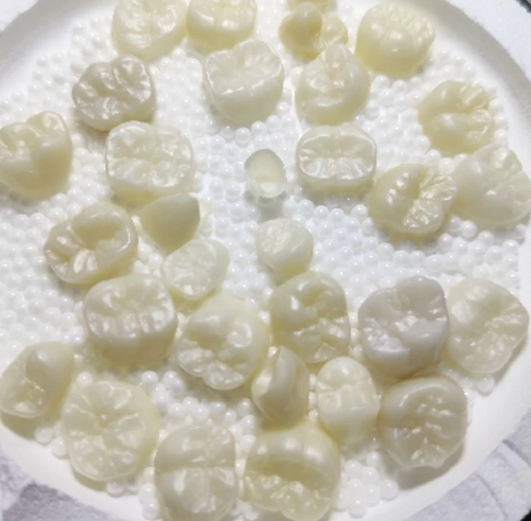
The amount of shrinkage is strongly related to the condition of the pre-sintered body.
One of the most important factors is pre-sintered density.
Consider two zirconia blocks made from the same type of powder.
A lower-density pre-sintered block contains more pore volume. During final sintering, more pore space needs to be eliminated, resulting in greater densification and potentially greater linear shrinkage.
A higher-density block contains less remaining pore volume, so there is less room for further densification.
This creates an important relationship:
Pre-sintered density → remaining porosity → densification → dimensional shrinkage
For dental zirconia manufacturing, controlling the uniformity of density is therefore just as important as controlling the average density.
Suppose different regions of a zirconia block have different pre-sintered densities.
If one area has a lower density than another, it may undergo more densification during sintering. As a result, different areas can experience slightly different dimensional changes.
This may contribute to dimensional inaccuracies in larger or more complex restorations.
For this reason, zirconia manufacturing focuses on achieving a consistent internal structure through controlled:
Powder characteristics
Powder mixing and processing
Compaction
Pre-sintering
Density distribution
The goal is not simply to achieve a specific average shrinkage value, but to achieve uniform and repeatable shrinkage throughout the material.
Zirconia does not shrink by exactly the same percentage in every material or every production batch.
Manufacturers therefore determine shrinkage experimentally.
A simplified example would be:
Pre-sintering dimension: 100.00 mm
Post-sintering dimension: 79.20 mm
The linear shrinkage is:
[
\frac{100.00-79.20}{100.00}\times100%=20.8%
]
The corresponding dimensional retention factor is:
[
\frac{79.20}{100.00}=0.792
]
This measured value can then be used to establish an appropriate CAM compensation factor.
In actual production, shrinkage testing needs to follow a controlled measurement procedure, and dimensional behavior may be evaluated in different directions.
This is the key reason why a restoration can return close to its intended dimensions after sintering.
Suppose the desired final dimension is:
10.00 mm
and the measured linear shrinkage factor is approximately:
0.792
The CAM system needs to produce a larger pre-sintered restoration:
[
10.00 / 0.792 \approx 12.63\text{ mm}
]
After sintering:
[
12.63\times0.792\approx10.00\text{ mm}
]
The actual values used by a CAM system depend on the specific zirconia material and its measured shrinkage factor.
Therefore, the zirconia itself does not “know” that it needs to shrink to a particular final dimension.
Instead:
The material provides predictable shrinkage → the manufacturer measures it → the CAM system compensates for it.
Ideally, a homogeneous zirconia body should show similar shrinkage in different directions. This is often described as relatively isotropic shrinkage.
However, real materials may show differences between the X, Y, and Z directions.
For example, a hypothetical material could show:
| Direction | Linear Shrinkage |
|---|---|
| X | 20.8% |
| Y | 21.0% |
| Z | 20.7% |
The small differences indicate relatively consistent dimensional behavior.
If the differences are larger, the material may show more pronounced anisotropic shrinkage.
This is particularly important for large bridges and complex restorations, where even small dimensional deviations can accumulate.
The sintering program determines how the material moves through the densification process.
Important parameters include:
Heating rate
Peak sintering temperature
Holding time
Cooling rate
Furnace temperature uniformity
Restoration size and geometry
Placement inside the furnace
A higher temperature does not simply mean “better shrinkage control.”
If the sintering conditions are not appropriate, excessive grain growth, insufficient densification, or other changes in the microstructure can affect the final properties and dimensional stability.
The objective is to establish a controlled and repeatable sintering process that produces the expected final density and dimensions.
Different zirconia materials may have different:
Powder characteristics
Particle size distributions
Stabilizer systems
Compaction conditions
Pre-sintered densities
Sintering behaviors
Therefore, one universal shrinkage factor cannot be applied to every zirconia block.
Even when two materials have similar compositions, their processing conditions may produce different pre-sintered structures and therefore different sintering behavior.
This is why the shrinkage factor should be determined for the specific material and manufacturing process rather than simply assumed.
The dimensional accuracy of a zirconia restoration can be viewed as a closed-loop process:
Zirconia powder
↓
Powder processing and compaction
↓
Controlled pre-sintered density
↓
Pre-sintering
↓
Shrinkage measurement
↓
Shrinkage factor determination
↓
CAD/CAM compensation
↓
Milling
↓
Final sintering
↓
Densification and shrinkage
↓
Final restoration
This explains why zirconia can achieve relatively predictable dimensional changes during sintering.
The accuracy does not come from the furnace alone. It comes from controlling the material before sintering, characterizing its actual dimensional behavior, maintaining a stable sintering process, and applying the appropriate compensation during CAD/CAM manufacturing.
Zirconia sintering shrinkage is fundamentally a densification process. During heating, atomic and ionic diffusion allows zirconia particles to bond more closely, while microscopic pores gradually decrease. As the pore volume is reduced, the overall dimensions of the material decrease.
At the same time, zirconia also undergoes thermal expansion during heating. The final dimensional change is therefore the result of several physical processes occurring throughout the heating and sintering cycle.
The reason dental zirconia can achieve predictable final dimensions is not because it shrinks by a perfectly fixed percentage. Instead, manufacturers control the powder, density, pre-sintering process, and final sintering conditions, then measure the actual shrinkage and compensate for it through CAD/CAM software.

Dry & wet milling for zirconia, PMMA, wax with auto tool changer.
learn more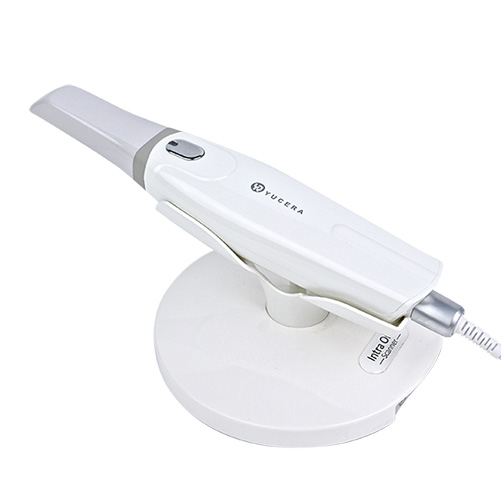
High-precision 3D scanning, AI calibration, full-arch accuracy.
learn more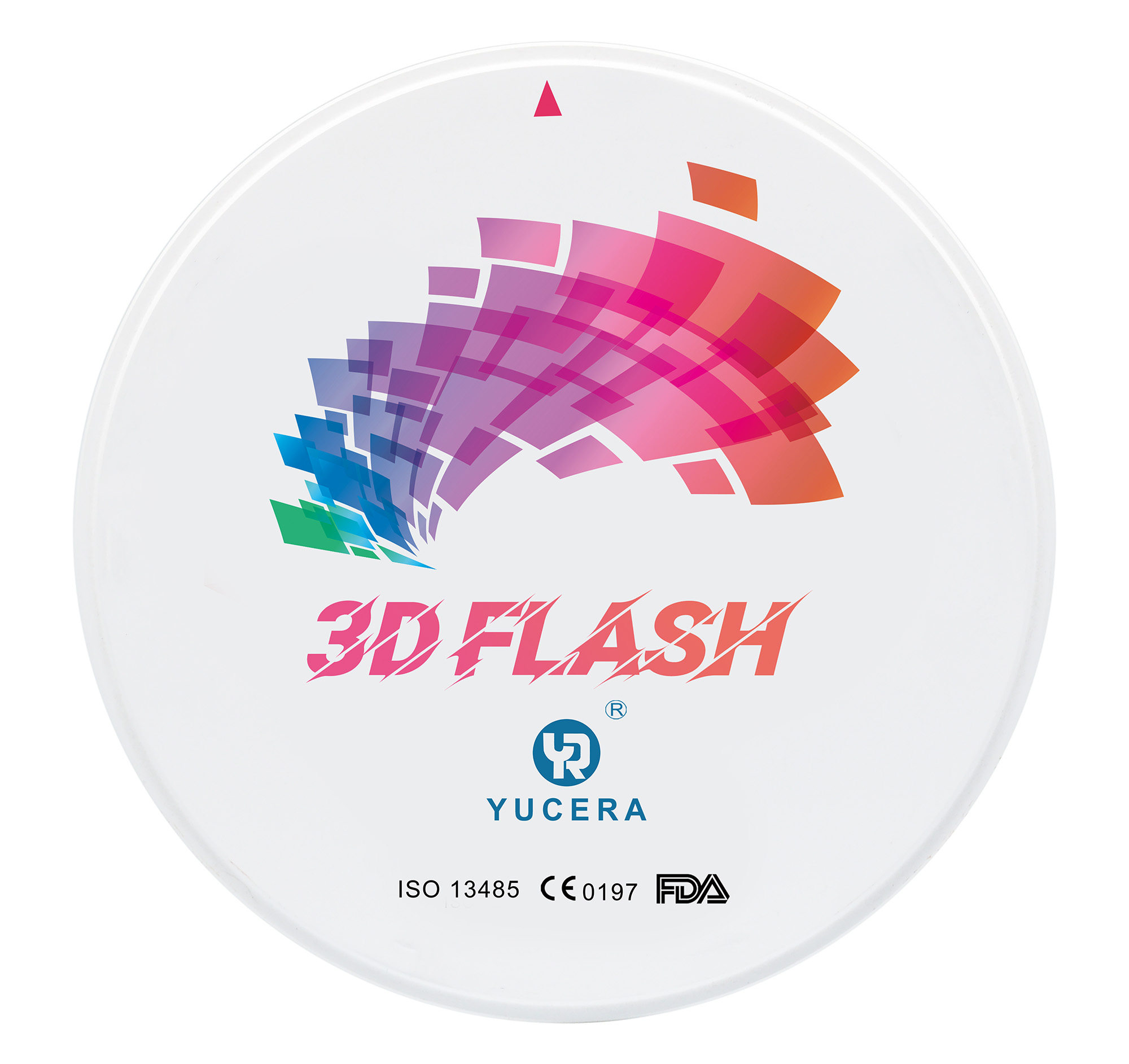
40-min full sintering with 57% incisal translucency and 1050 MPa strength.
learn more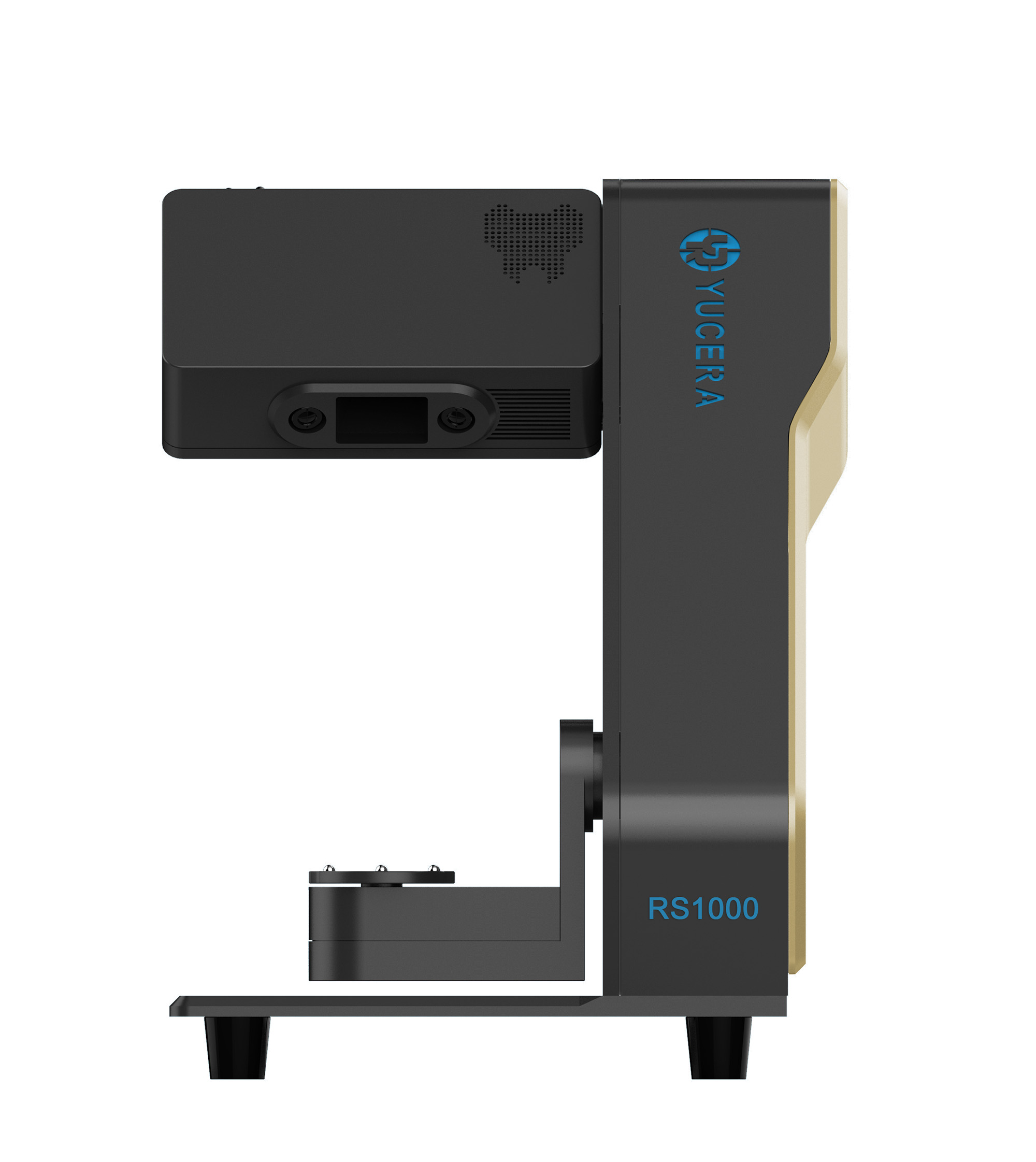
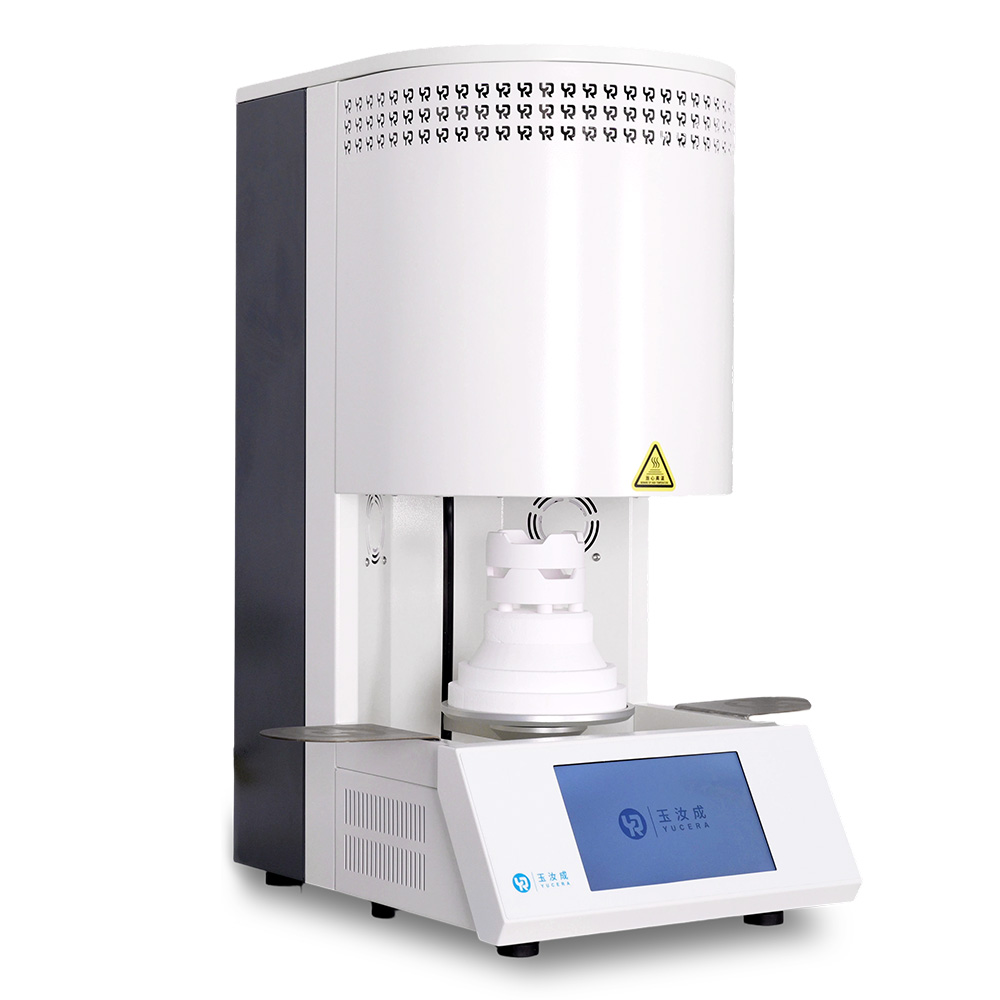
40-min cycle for 60 crowns, dual-layer crucible and 200°C/min heating.
learn more
High-speed LCD printer for guides, temporaries, models with 8K resolution.
learn more


2026-01-18
2026-09-16

2026-02-17


