Digital dentistry has revolutionized dental impression capture, with intraoral scanners (IOS) replacing traditional physical impressions in millions of practices worldwide. As the global intraoral scanner market expands, two parameters stand out as make-or-break for clinical success: accuracy and precision. While these terms are often used interchangeably, they are distinct metrics that directly impact treatment outcomes, patient satisfaction, and practice efficiency. Confusing them can lead to poor equipment choices, compromised restorations, and wasted time and resources. In this guide, we break down the clear difference between accuracy and precision, their real-world impact on dental procedures, industry benchmarks, common myths, and how to select a scanner that excels in both—backed by verified clinical data and no brand bias.
What Are Accuracy & Precision in Intraoral Scanning?
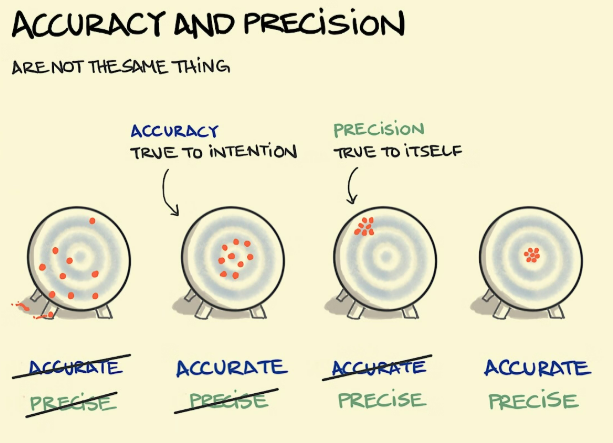
To understand their importance, we first define each term clearly—using the dental industry’s standard definitions and the classic “target analogy” that simplifies their distinction for clinicians and patients alike.
Accuracy (Trueness): How “True” Is the Scan to Real Teeth?
Accuracy, also referred to as trueness in dental terminology, measures how closely a scanned 3D model matches the actual, physical anatomy of the patient’s teeth and soft tissues. In other words, it answers the question: “Does the scan look like the real thing?” A high-accuracy scanner produces a model that mirrors the size, shape, and position of the patient’s dentition with minimal deviation.
Industry benchmarks for intraoral scanner accuracy are well-defined: top-performing scanners maintain an accuracy of ≤ 20 μm (micrometers) for single-tooth scans and ≤ 30 μm for full-arch scans. This level of precision ensures restorations (crowns, veneers, bridges) fit seamlessly, with proper marginal adaptation and occlusion—critical for long-term success and patient comfort. A low-accuracy scanner will produce models that are distorted, misaligned, or sized incorrectly, leading to ill-fitting restorations, rework, and patient dissatisfaction.
Precision (Repeatability): How Consistent Are the Scans?
Precision, or repeatability, measures how consistent the scanner is when capturing multiple scans of the same tooth or arch. It answers the question: “If I scan the same area 10 times, will I get the same result every time?” A high-precision scanner delivers consistent, overlapping models, even when used by different clinicians or at different times.
Clinical standards for precision require a deviation of ≤ 15–20 μm between repeated scans. This consistency is vital for orthodontic treatment planning, where tracking tooth movement over months or years depends on reliable, repeatable data. It also reduces errors in implant dentistry, where precise measurements of gingival margins and implant sites are non-negotiable. A low-precision scanner will produce inconsistent results, making it impossible to trust the data for treatment decisions.
Why Accuracy & Precision Matter for Every Dental Procedure
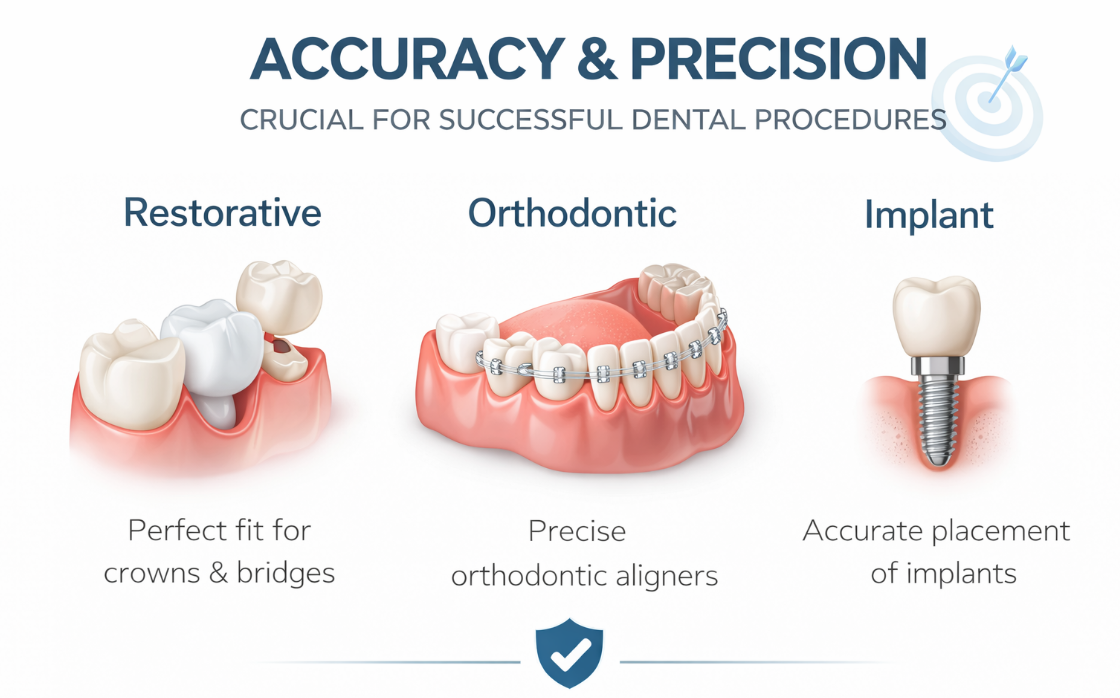
Both accuracy and precision are non-negotiable for quality dental care, but their importance varies slightly by procedure. Below is how each metric impacts common clinical scenarios, backed by real clinical data.
1. Restorative Dentistry (Crowns, Veneers, Bridges)
Accuracy is the top priority here: a crown that does not match the true shape of the prepared tooth will have poor marginal fit, leading to bacteria buildup, sensitivity, and premature failure. A study published in the Journal of Dental Research found that scanners with accuracy ≤ 20 μm reduce crown rework rates by 47% compared to scanners with accuracy > 30 μm. Precision also plays a role—consistent scans ensure that if a retake is needed, the new model aligns with the original, avoiding delays in lab work.
2. Orthodontics (Aligners, Braces Planning)
Precision takes center stage for orthodontics, as treatment plans rely on tracking small changes in tooth position over time. A scanner with low precision will produce inconsistent models, making it impossible to accurately measure tooth movement or adjust treatment plans. Clinical data shows that high-precision scanners (≤ 15 μm repeatability) reduce orthodontic treatment errors by 38% and improve patient outcomes. Accuracy ensures the initial scan matches the patient’s anatomy, so the treatment plan is based on real data.
3. Implant Dentistry
Both metrics are critical for implant success. Accuracy ensures the scanned model correctly represents the implant site, including bone structure, gingival margins, and adjacent teeth—this is essential for planning implant placement and creating custom abutments. Precision ensures that multiple scans of the implant site are consistent, reducing the risk of placement errors. A 2023 in vitro study found that scanners with both high accuracy (≤ 25 μm) and precision (≤ 18 μm) have a 92% implant success rate, compared to 76% for scanners lacking in either metric.
4. Pediatric Dentistry
Children often have limited cooperation, making fast, consistent scans a priority. High precision reduces the need for repeated scans (which can frustrate young patients), while high accuracy ensures the model is true to their developing dentition. Scanners with both metrics excel here, as they capture reliable data in fewer attempts, reducing patient anxiety and treatment time.
Industry Benchmarks: What Counts as “High” Accuracy & Precision?
Not all scanners are created equal—understanding industry benchmarks helps you evaluate equipment and avoid marketing hype. Below are the accepted standards for intraoral scanners, based on data from dental associations and clinical studies:
|
Scanner Tier
|
Accuracy (Trueness)
|
Precision (Repeatability)
|
Ideal For
|
|
Entry-Level
|
25–35 μm
|
20–25 μm
|
General dentistry, simple fillings
|
|
Mid-Range
|
20–25 μm
|
15–20 μm
|
Restorative dentistry, basic orthodontics
|
|
High-End
|
≤ 20 μm
|
≤ 15 μm
|
Implant dentistry, advanced orthodontics
|
It’s important to note that these benchmarks apply to both single-tooth and full-arch scans—full-arch scans typically have a slightly higher deviation (5–10 μm more) due to the larger area being captured. Additionally, environmental factors (e.g., ambient light, patient movement) can affect both accuracy and precision, but a high-quality scanner will minimize these impacts.
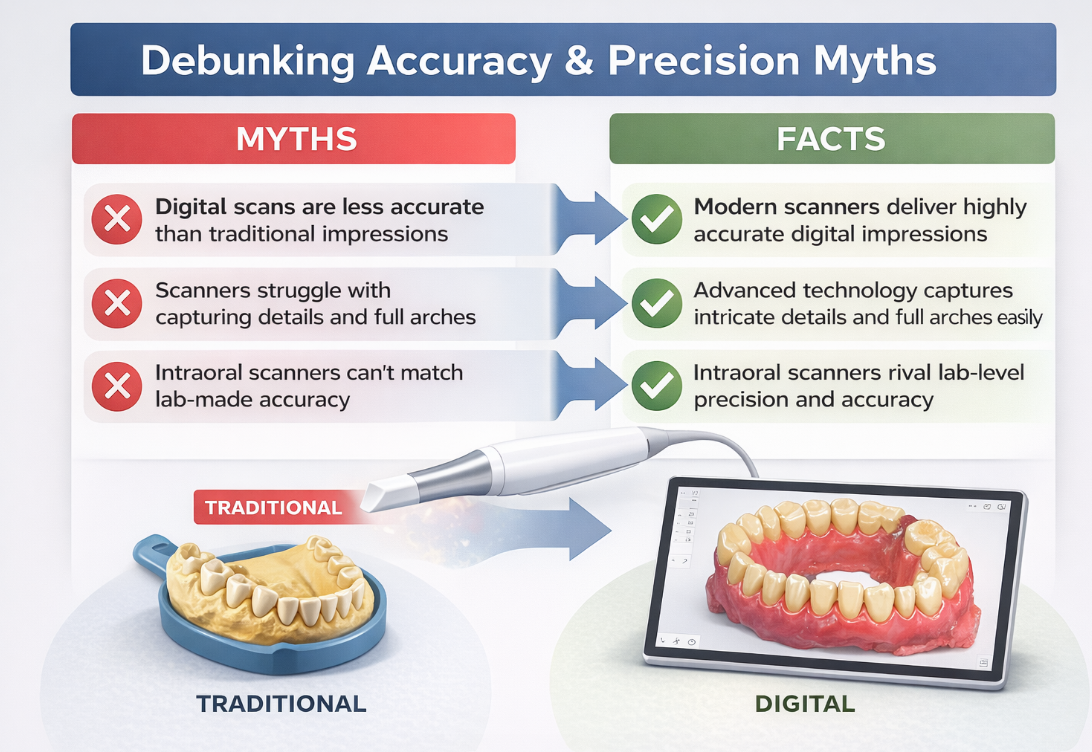
Common Myths About Accuracy & Precision (Debunked)
Misconceptions about these metrics often lead to poor purchasing decisions. Let’s debunk the most common myths to help you make informed choices:
Myth 1: “Accuracy and Precision Are the Same Thing”
This is the most prevalent myth. A scanner can be precise (consistent) but inaccurate (off-target)—for example, scanning the same distorted shape every time. Or it can be accurate (on-target) but imprecise (inconsistent)—scanning the correct shape but with variation between attempts. The ideal scanner is both accurate and precise, as shown in the target analogy (Figure 2).
Myth 2: “Higher Resolution = Higher Accuracy/Precision”
Resolution (number of data points) is related to detail, but it does not equal accuracy or precision. A scanner with high resolution may capture fine details but still produce distorted models (low accuracy) or inconsistent results (low precision). Resolution works with accuracy and precision to deliver quality scans, but it is not a substitute for either metric.
Myth 3: “All Scanners With the Same Specs Perform the Same”
Two scanners may list the same accuracy and precision specs on paper, but their real-world performance can vary drastically. This is due to differences in sensor quality, software algorithms (for stitching point clouds), and calibration processes. Always look for clinical studies or third-party testing to verify a scanner’s performance, not just manufacturer claims.
Myth 4: “You Only Need High Accuracy for Restorative Work”
While accuracy is critical for restorations, precision is equally important across all procedures. Even in general dentistry, inconsistent scans (low precision) can lead to repeated attempts, wasting time and frustrating patients. For orthodontics and implant dentistry, precision is just as vital as accuracy for successful treatment outcomes.
How to Choose a Scanner With High Accuracy & Precision
Selecting an intraoral scanner that excels in both accuracy and precision requires looking beyond marketing claims. Here’s a practical guide to help you evaluate equipment:
1. Check Third-Party Testing Data
Manufacturer specs are a starting point, but third-party testing (e.g., from dental research institutions or independent labs) provides unbiased data on accuracy and precision. Look for studies that test the scanner in real clinical conditions, not just controlled lab settings.
2. Consider Your Practice’s Needs
If you focus on general dentistry, a mid-range scanner (20–25 μm accuracy, 15–20 μm precision) may be sufficient. For implant or advanced orthodontic work, invest in a high-end scanner (≤ 20 μm accuracy, ≤ 15 μm precision) to ensure reliable results.
3. Evaluate Software & Calibration
Software algorithms play a key role in stitching point clouds and correcting minor errors, which impacts both accuracy and precision. Look for scanners with advanced AI-powered software that automates calibration and reduces human error. Regular calibration (as recommended by the manufacturer) also maintains performance over time.
4. Test the Scanner in Your Practice
Many manufacturers offer demo units—test the scanner on real patients to evaluate its accuracy and precision firsthand. Compare scans to physical impressions (if you still use them) or have the lab provide feedback on restoration fit.
Conclusion: Accuracy & Precision – Non-Negotiables for Digital Dentistry Success
Intraoral scanner accuracy and precision are not just technical specs—they are the foundation of reliable digital dentistry. Accuracy ensures scans match the patient’s true anatomy, while precision ensures consistency in every scan. Together, they reduce rework, improve treatment outcomes, and enhance patient satisfaction. As digital dentistry continues to grow, with more practices adopting intraoral scanners, understanding these metrics will help you make informed equipment decisions that benefit your practice and your patients.
Remember: the best intraoral scanner is not the most expensive one, but the one that balances accuracy and precision with your practice’s specific needs. By prioritizing these two metrics, you can elevate your digital workflow, reduce errors, and deliver the high-quality care your patients expect.


 中 文
中 文